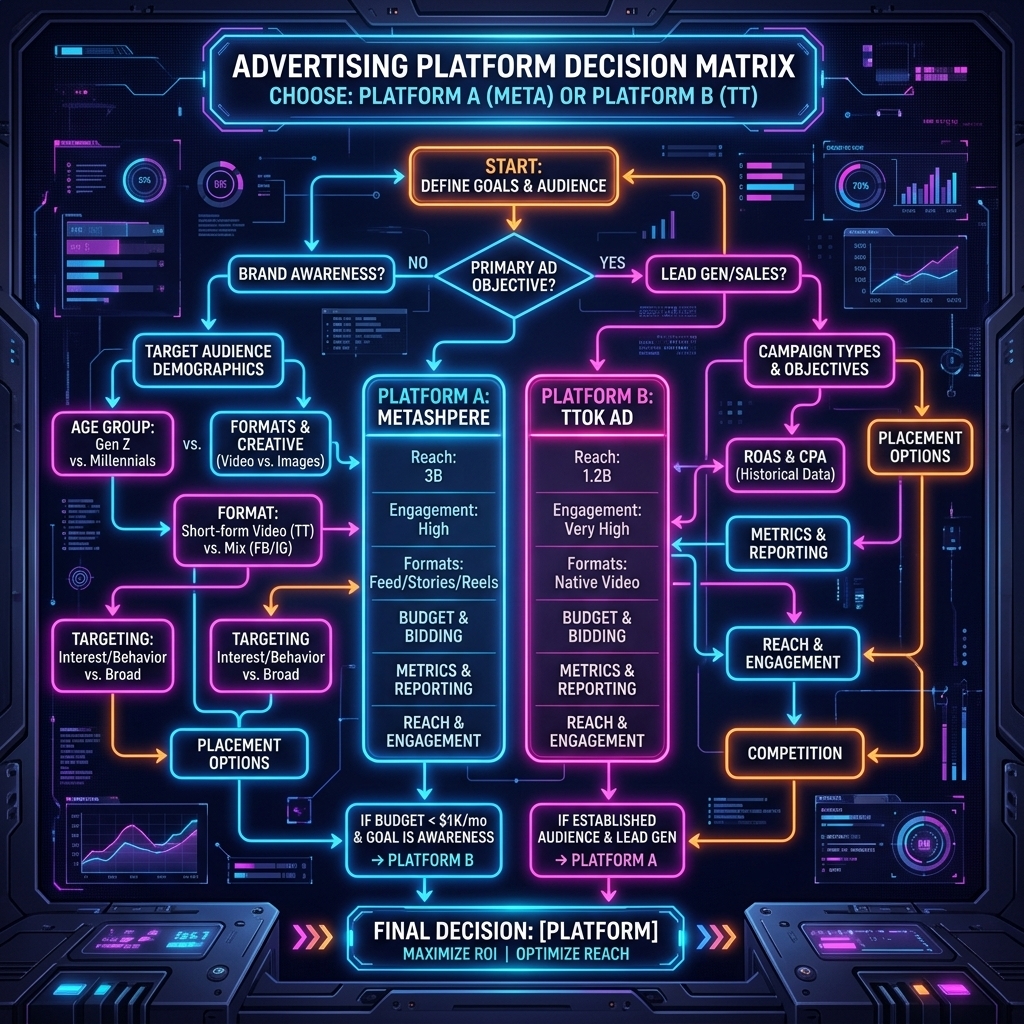
TikTok and Instagram both run short-form video ads, but they reach different audiences with different content expectations. TikTok dominates Gen Z with raw, algorithm-driven discovery. Instagram holds millennials with polished content and Meta’s mature ad infrastructure.
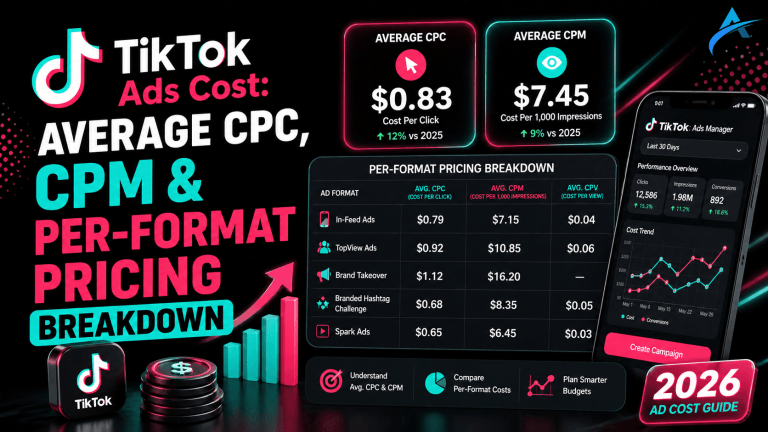
TikTok CPMs average ~$6. Instagram CPMs range from $6-$10. The cost gap is smaller than most comparisons suggest — the real difference is audience composition, creative style, and the ad management ecosystem behind each platform.
TikTok Ads vs Instagram Ads Comparison
| Metric | TikTok Ads | Instagram Ads |
|---|---|---|
| Primary Format | Short-form vertical video | Stories, Reels, Feed, Carousel |
| Core Audience | Gen Z (16-24 primary) | Millennials (25-34 primary) |
| Monthly Active Users | 1.5B+ | 2B+ |
| Average CPM | ~$6 | $6-$10 |
| Average CPC | $0.50-$2.00 | $0.50-$3.00 |
| Content Style | Raw, authentic, UGC-native | Polished, aspirational, brand-curated |
| Ad Platform | TikTok Ads Manager | Meta Ads Manager |
| Ecommerce | TikTok Shop (growing) | Instagram Shopping (established) |
| Organic Reach | Higher (algorithm favors new content) | Lower (pay-to-play for brands) |
| Engagement Rate | Higher average per post | Lower average, more established ecosystem |
Cost Comparison
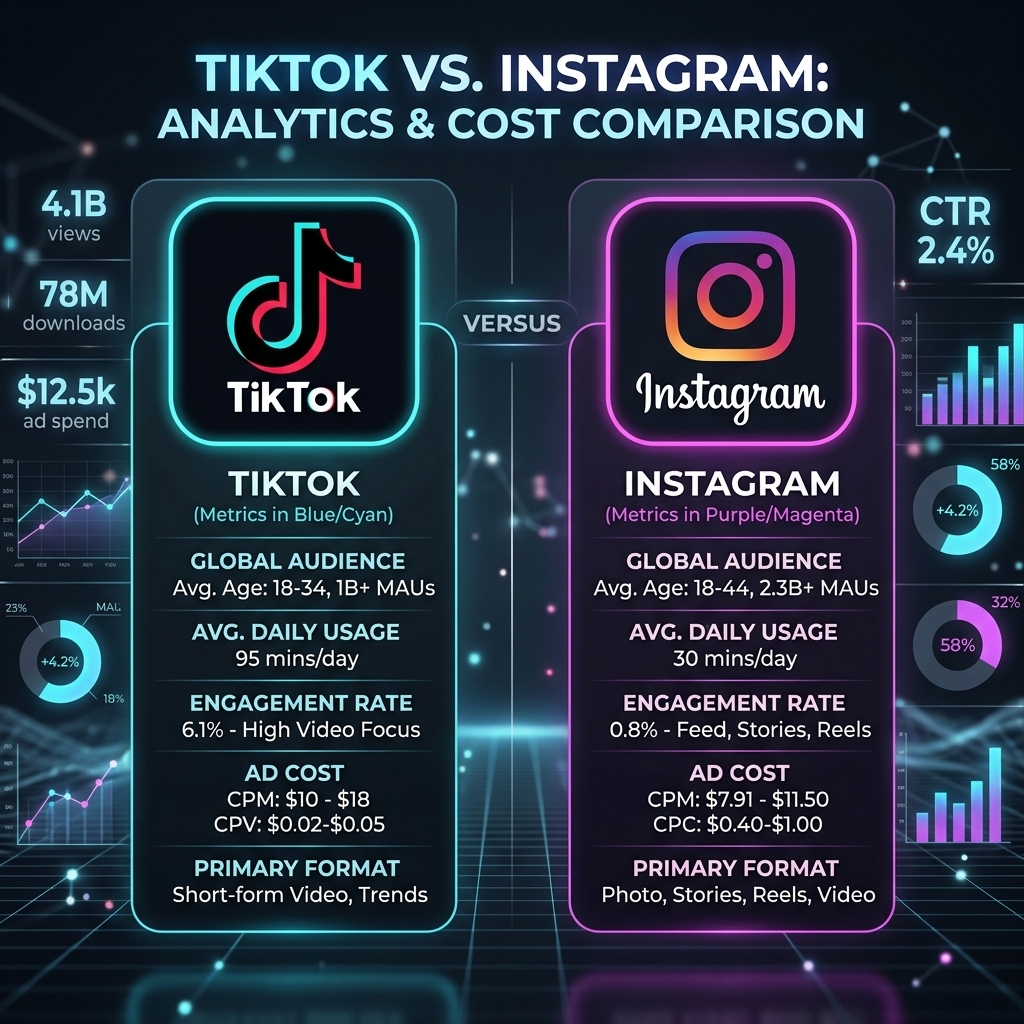
TikTok CPM averages ~$6 versus Instagram’s $6-$10 range. On a per-impression basis, TikTok is 20-40% cheaper. CPC ranges overlap more closely — $0.50-$2.00 on TikTok versus $0.50-$3.00 on Instagram.
The hidden cost difference is creative production. TikTok campaigns burn through creatives in 7-14 days. Instagram campaigns sustain performance for 30-60 days. Over a quarter, TikTok requires 3-4x the creative volume, which adds production cost that does not show up in platform metrics.
Instagram’s integration with Facebook through a shared agency ad account on Meta also reduces overhead. You manage both platforms from one interface, share pixel data, and build unified audiences — operational savings that compound as spend scales.
Audience Demographics
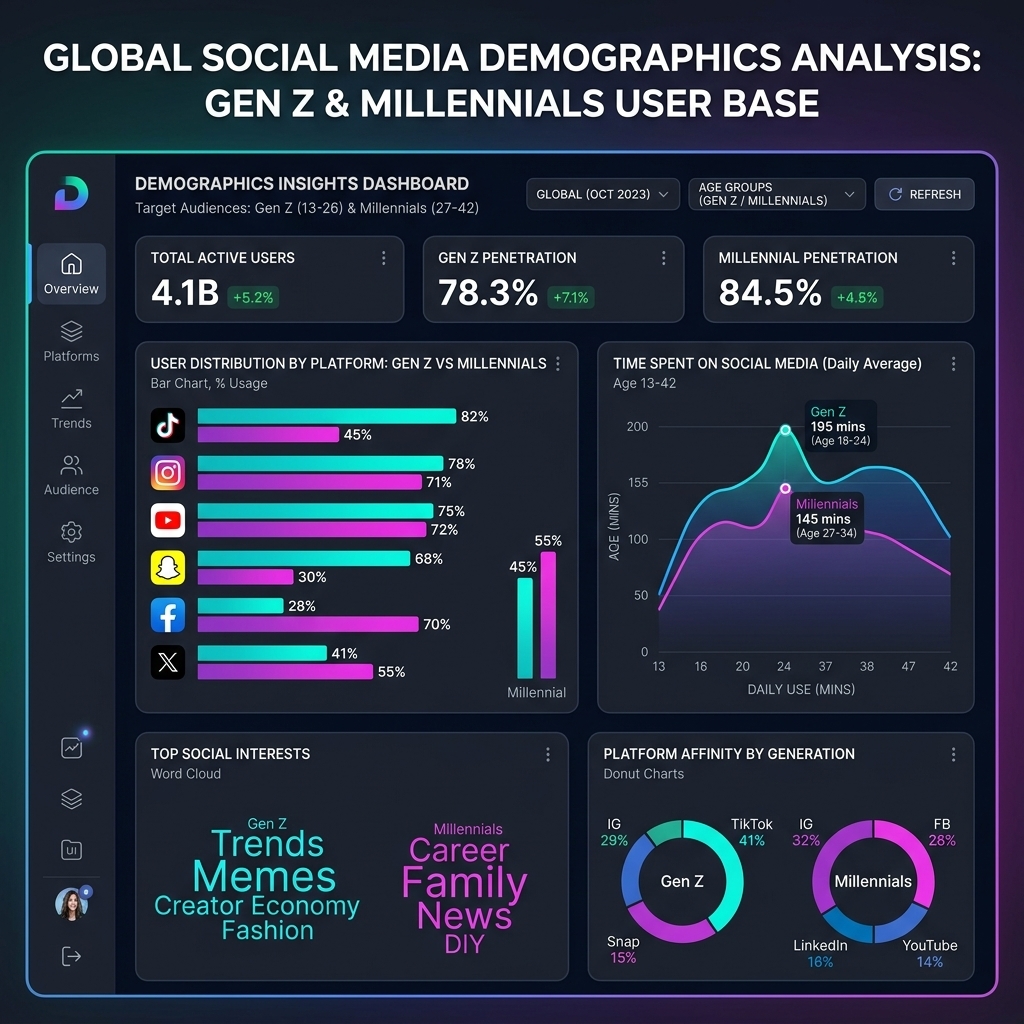
TikTok’s user base skews young. The 16-24 cohort is the dominant segment, with 25-34 as secondary. Users over 35 exist on the platform but engage less with ads and convert at lower rates.
Instagram’s core is 25-34 — established millennials with higher average spending power. The 18-24 cohort is strong on Instagram too, creating overlap with TikTok. But for reaching consumers 30-45, Instagram is the clear choice.
Both platforms index heavily female, though TikTok’s gender split is closer to even than Instagram’s.
If your product targets Gen Z exclusively, TikTok is the primary channel. If your audience spans 18-40, Instagram gives you broader reach within a single platform. Running both through verified agency ad accounts covers the full youth-to-millennial spectrum.
Ad Formats
TikTok’s format options are video-centric:
– In-Feed Ads: Appear between organic videos in the For You feed
– Spark Ads: Boost existing organic posts (yours or a creator’s) as paid ads
– TopView: Full-screen takeover when users first open the app
– Branded Hashtag Challenges: Sponsored challenges encouraging user participation
Instagram offers more format diversity:
– Reels Ads: Short-form video in the Reels tab
– Stories Ads: Full-screen vertical between user stories
– Feed Ads: Image or video in the main feed
– Carousel Ads: Multiple images/videos users swipe through
– Explore Ads: Appear in the Explore discovery tab
– Shopping Ads: Product tags linking directly to checkout
Instagram’s format variety means you can test static images, carousels, and video without committing exclusively to video production. TikTok requires video — no exceptions.
Targeting and Analytics
Instagram runs on Meta’s ad infrastructure — the same targeting engine as Facebook. This means access to detailed interest targeting, behavioral data, custom audiences from pixel events, lookalike audiences, and cross-platform retargeting between Facebook and Instagram.
TikTok’s targeting is functional and improving. Interest-based, behavior-based, and demographic targeting works. But the signal depth does not match Meta’s ecosystem. TikTok’s Conversions API is maturing, and first-party data integration is getting stronger, but advertisers consistently report better optimization performance on Meta for conversion-focused campaigns.
Analytics follow the same pattern. Meta Ads Manager provides granular reporting, attribution modeling, and A/B testing tools refined over a decade. TikTok Ads Manager covers the essentials but lacks the depth that experienced advertisers expect from an agency ad account dashboard.

Creative Strategy
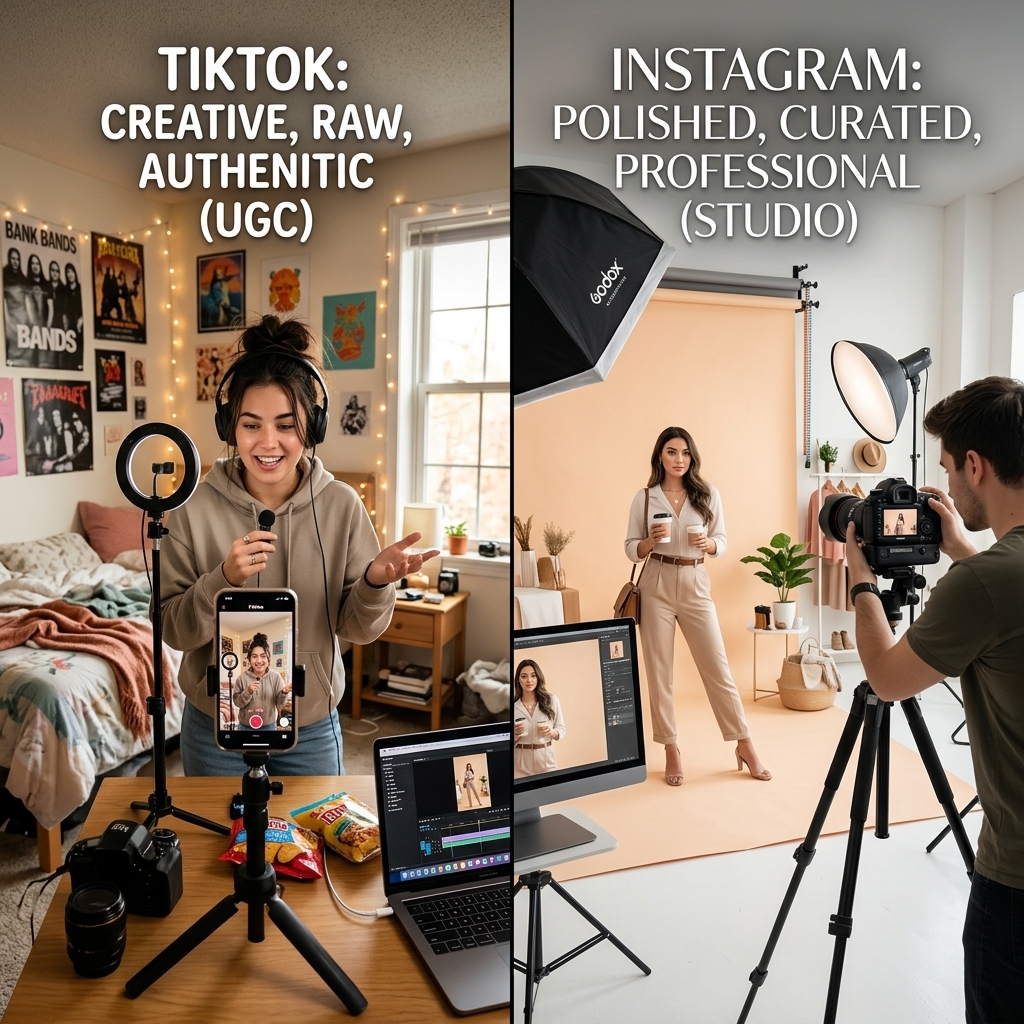
TikTok creative must feel native. Ads that look like ads get scrolled past. The winning formula is creator-style content — direct-to-camera, casual lighting, trending audio, text overlays. Production value should look low even if it is not.
Instagram accepts both polished and raw content. A high-quality product photo with clean design performs well in Feed and Stories. UGC-style Reels work too. The platform rewards visual quality more than TikTok does.
This difference affects brand positioning. Luxury, lifestyle, and aspirational brands find their aesthetic aligns naturally with Instagram. DTC brands, entertainment, and youth-oriented products fit TikTok’s creative culture.
Creative refresh cadence matters. Budget for weekly creative production on TikTok. Monthly refreshes work for Instagram. This production requirement is the deciding factor for teams with limited creative resources.
Which Platform to Choose
Choose TikTok Ads when:
– Your target demographic is 16-24
– You can produce native video content weekly
– Brand awareness and virality are primary goals
– You sell impulse-friendly products under $60
– You want cheaper CPMs for top-of-funnel reach
Choose Instagram Ads when:
– Your target demographic is 25-40
– You want format flexibility (image, carousel, video)
– You need Meta’s mature targeting and analytics
– You sell visual, lifestyle, or aspirational products
– You already run Facebook Ads (shared Meta account)
Use both when:
– You target 18-34 and want maximum reach across both platforms
– TikTok drives awareness, Instagram drives consideration and conversion
– You have the creative capacity for both content styles
Scale your campaigns on TikTok with a verified agency ad account that supports higher daily spend limits. Rent a TikTok Ads account from ADShift.
FAQ
Which platform has better organic reach?
TikTok. Its algorithm surfaces content based on engagement metrics, not follower count. A brand-new TikTok account can reach millions organically. Instagram’s organic reach for brands has declined to near-zero without paid promotion.
Can I use the same video on both platforms?
Sometimes. A raw, authentic video may work on both. But platform-native content always outperforms cross-posted content. TikTok users expect TikTok-style editing. Instagram users expect slightly higher production value.
Which platform is better for ecommerce?
Instagram Shopping is more established with direct checkout integration. TikTok Shop is growing rapidly and works well for impulse products. For catalog-based selling, Instagram currently has the stronger infrastructure.
Is TikTok worth it if my audience is over 30?
TikTok’s 30+ audience is growing but still secondary. If 80%+ of your customers are over 30, Instagram delivers more efficient reach. If you want to test TikTok, start with a small budget and measure actual conversion demographics.
Do I need separate budgets for each platform?
Yes. Each platform has its own ad manager, billing, and agency ad account structure. Allocate budget based on where your target audience spends time and where your creative strengths align.