
Most law firms waste 30-40% of their Facebook Ads budget on poorly targeted audiences or non-compliant ad copy, leading to account flags and minimal lead generation. Facebook Ads for attorneys, when executed strategically, can deliver high-quality leads at a competitive cost. This article will guide you through navigating compliance, crafting high-converting ad strategies, optimizing landing pages, proving ROI, and scaling your campaigns for maximum case volume.
Navigating Facebook Ads for Attorneys: Compliance & Targeting Challenges
Facebook Ads for attorneys navigate compliance by adhering to strict advertising policies that govern sensitive categories like legal services. These policies aim to prevent discrimination and protect user privacy, often leading to challenges for advertisers unfamiliar with the nuances. A key outcome of non-compliance is immediate ad rejection, account flags, or even permanent bans, which can cripple a law firm’s digital marketing efforts. I’ve seen many law firms struggle with account bans because they used language implying knowledge of a user’s personal legal situation or targeted based on overly specific, sensitive demographics.
To maintain compliance, focus on broad, non-discriminatory targeting options. Avoid implying a user’s specific legal need directly in ad copy. For instance, instead of “Are you struggling with debt?”, phrase it as “Understand your options for debt relief.” Utilize interest-based targeting for relevant categories like “small business owner,” “real estate investor,” or “family law resources” rather than sensitive life events. Ensure your ad copy and creatives are factual, avoid sensationalism, and clearly state that your services are for consultation, not guaranteed outcomes.
Understanding these compliance intricacies is the foundation; the next critical step is crafting effective ad strategies that convert clicks into qualified leads.

Crafting High-Converting Ad Strategies for Legal Services
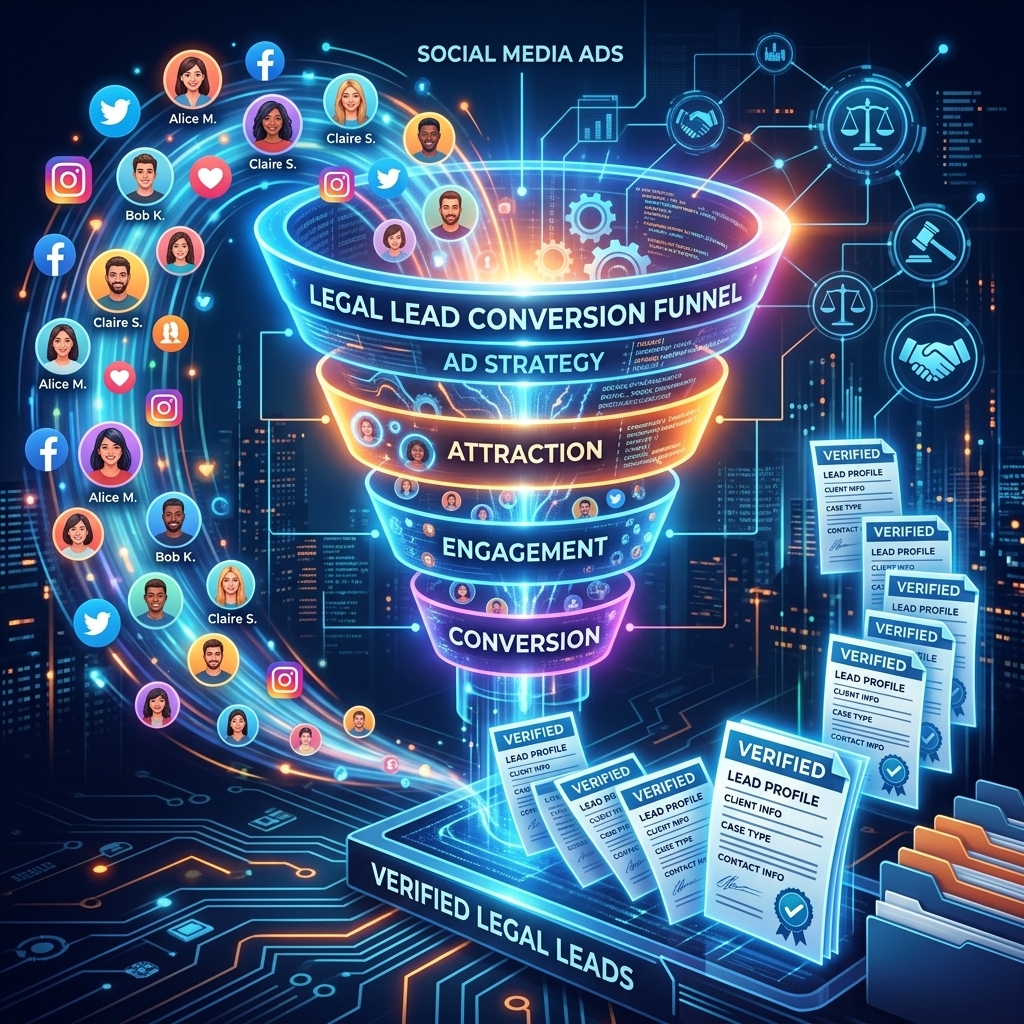
Crafting high-converting ad strategies for legal services involves precise audience segmentation and compelling creative development. A high-converting strategy moves potential clients through a funnel, from initial awareness to direct consultation, resulting in lower Cost Per Acquisition (CPA) and higher lead quality. Our campaigns show that video ads explaining common legal issues or client testimonials can reduce Cost Per Lead (CPL) by 15-20% for legal services compared to static image ads, due to increased engagement and trust-building.
Start by segmenting your audience. For top-of-funnel awareness, target broad interests related to your practice areas (e.g., “entrepreneurship” for business law, “property investment” for real estate law). For middle-of-funnel engagement, create custom audiences from website visitors or video viewers and retarget them with more direct calls-to-action. Leverage Lookalike Audiences (1-3% of your best client lists) to find new prospects similar to your existing high-value clients. Creatives should focus on problem-solution scenarios, empathetic messaging, and clear value propositions. For example, an ad for personal injury might focus on “Getting the compensation you deserve” rather than graphic accident imagery. Advertisers using a verified agency ad account from AdShift often find it easier to test multiple ad strategies and scale budgets without initial spending limits, which is crucial for identifying winning campaigns quickly.
With effective strategies in place, optimizing the actual destination where prospects land is essential for converting those clicks into qualified leads.
Optimizing Landing Pages & Lead Forms for Legal Intakes
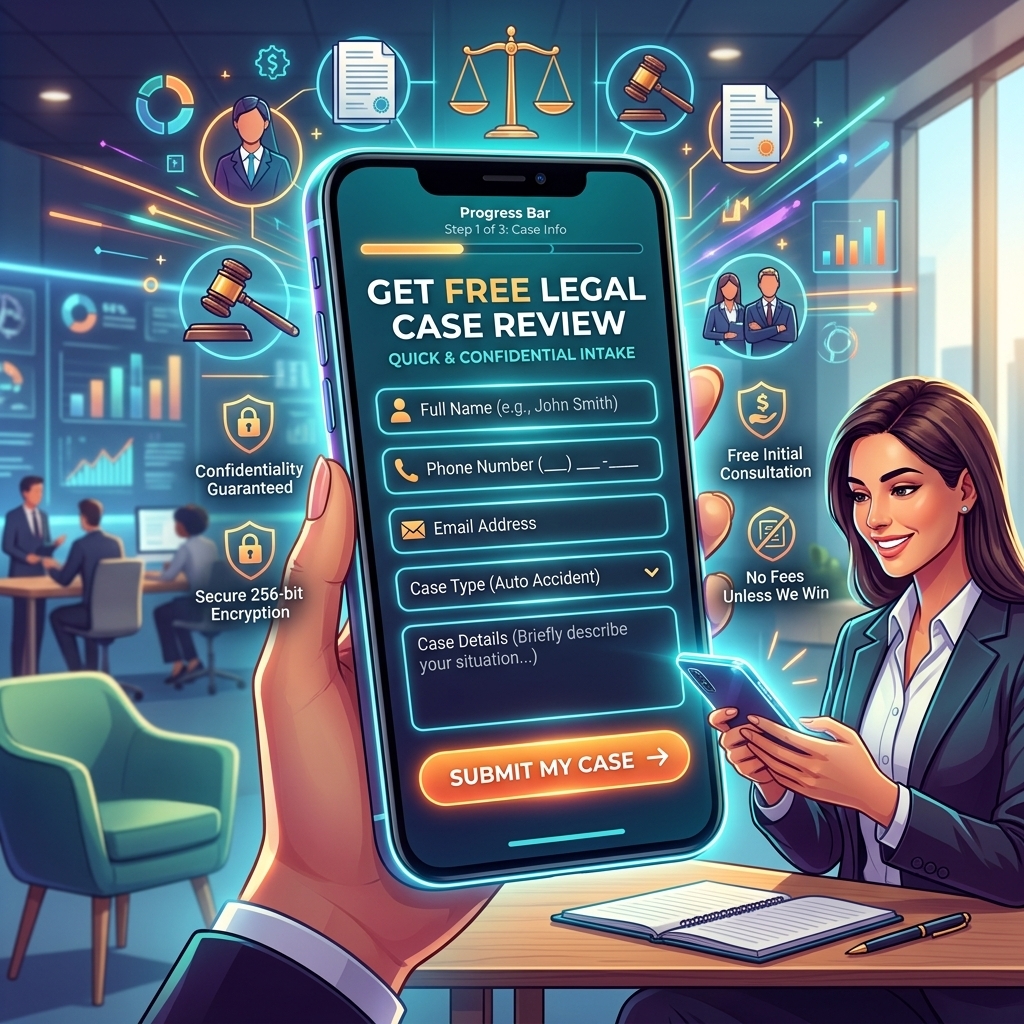
Optimizing landing pages and lead forms for legal intakes significantly improves conversion rates by simplifying the user journey and building trust. An optimized landing page features a clear value proposition, mobile responsiveness, and a streamlined path to conversion, ultimately leading to higher lead conversion rates and a better Return on Investment (ROI). A client recently achieved a 30% increase in lead form submissions by simplifying their mobile landing page, reducing the number of form fields from seven to three, and prominently displaying client testimonials.
Key elements for an effective legal services landing page include:
* Clear Headline: Immediately communicate the specific legal problem you solve.
* Trust Signals: Prominently display client testimonials, case results (if permitted by bar rules), awards, and attorney bios.
* Concise Copy: Explain your process and benefits without overwhelming detail. Focus on outcomes for the client.
* Mobile Responsiveness: Over 70% of Facebook traffic is mobile; ensure fast loading times and easy navigation.
* Simple Lead Forms: Only ask for essential information (Name, Email, Phone, brief description of issue). Too many fields deter conversions.
* Clear Call-to-Action (CTA): Use specific CTAs like “Get a Free Consultation” or “Schedule Your Case Review.”
For a comprehensive guide on maximizing your ad performance, refer to our Facebook Ads complete guide. Beyond optimizing for conversions, tracking and analysis provide the data needed for continuous improvement and proving the value of your ad spend.
Tracking & Analytics: Proving ROI for Attorney Ads
Tracking and analytics prove ROI for attorney ads by providing clear data on campaign performance and lead quality, moving beyond mere clicks to actual case acquisition. Robust ROI tracking involves implementing conversion tools and integrating them with your client management systems, leading to justified ad spend and scalable campaigns. We consistently see clients reduce their cost per qualified lead by 10-15% after implementing robust CRM tracking, allowing them to identify which campaigns are truly generating profitable cases.
The foundation of tracking is the Facebook Pixel, which allows you to monitor website actions (page views, lead form submissions, button clicks). Set up custom conversions for specific, high-value actions, such as “Contact Us Form Submitted” or “Phone Number Clicked.” For law firms, tracking offline conversions is crucial, as many leads turn into phone calls or in-person consultations. Integrate your Facebook Ads data with your Customer Relationship Management (CRM) system to track leads from initial contact through case sign-up. This allows you to assign a value to each lead and understand the true Cost Per Acquisition (CPA) for a closed case. Utilize call tracking software to monitor calls generated directly from your ads, providing granular data on call duration and lead quality. Rent a verified Facebook Ads account to ensure your tracking setup is robust and your data collection is uninterrupted.
Once you’ve mastered tracking, scaling your successful campaigns requires understanding the critical factors that drive growth and expanding your reach.

Scaling Successful Attorney Campaigns on Facebook
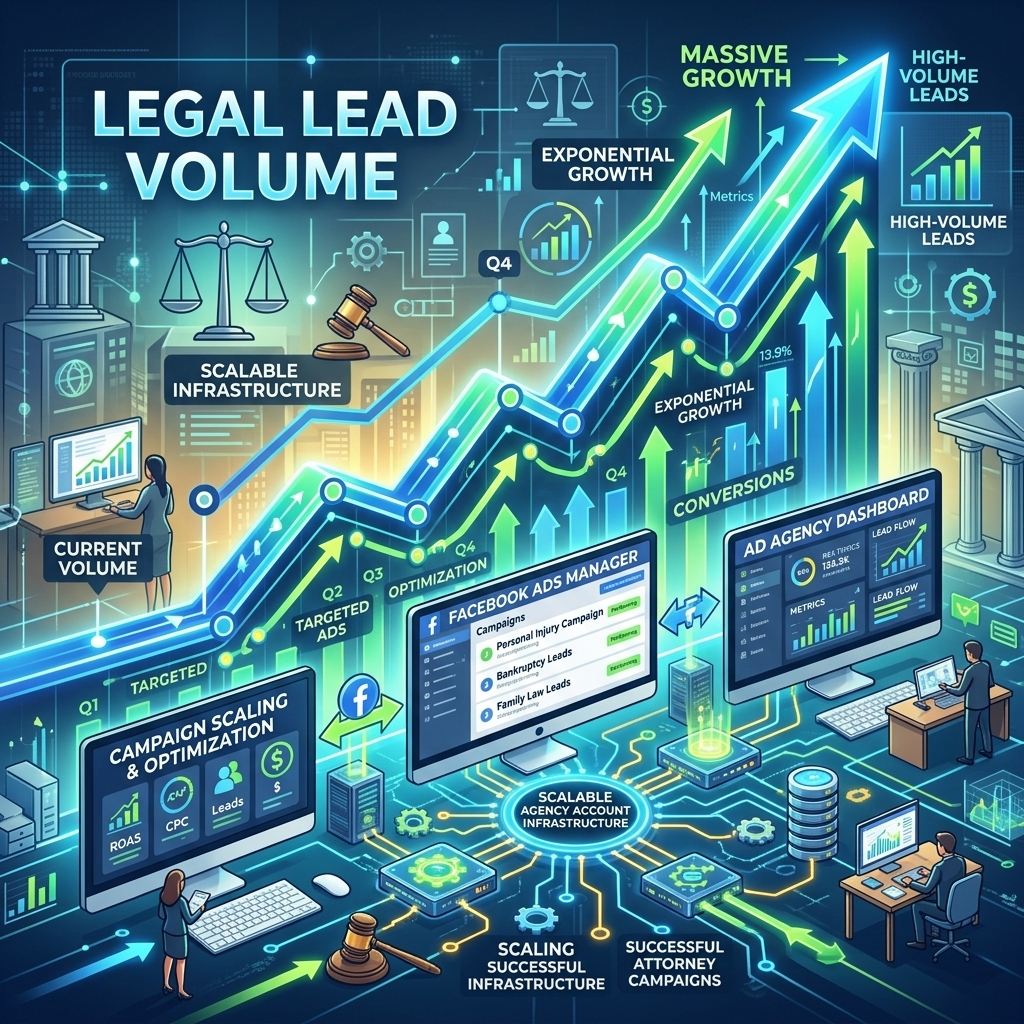
Scaling successful attorney campaigns on Facebook involves strategically increasing budget, expanding audiences, and diversifying ad formats to generate a higher volume of qualified leads. Effective scaling means maintaining or improving your Cost Per Acquisition (CPA) as you increase spending, ultimately leading to increased case volume and sustained growth. I’ve scaled legal campaigns from $500/day to $5,000/day by focusing on lookalike audiences derived from high-value client lists, consistently delivering profitable new cases.
To scale effectively:
* Gradual Budget Increases: Avoid sudden, large budget jumps that can destabilize campaign performance. Increase budgets by 10-20% every few days, monitoring performance closely.
* Expand Lookalike Audiences: Once your 1% Lookalike Audiences are performing well, test 2-5% and 5-10% Lookalikes based on your best client data (website visitors, lead form submitters, CRM client lists).
* Diversify Ad Creatives & Formats: Continuously test new ad copy, images, and video formats. What worked yesterday might fatigue tomorrow. Explore carousel ads for multiple service offerings or instant experience ads for immersive storytelling.
* Geo-Expansion: If your services are scalable across regions, gradually expand your geographical targeting to new, similar areas.
* Campaign Duplication: Duplicate your highest-performing ad sets or campaigns into new campaigns with slightly increased budgets. This can help reset the learning phase and capture new opportunities.
* Leverage High-Limit Accounts: For aggressive scaling, a high-limit agency ad account can be invaluable. Advertisers can rent a high-limit agency ad account to bypass typical spending caps and accelerate growth without the usual verification delays.
FAQ: Facebook Ads for Law Firms
Are Facebook Ads effective for attorneys?
Yes, Facebook Ads can be highly effective for attorneys, provided campaigns are structured with careful compliance, precise targeting, and compelling creatives. While compliance with Meta’s advertising policies for sensitive categories like legal services is strict, successful campaigns can generate high-quality leads at a competitive cost per acquisition (CPA). Key to success is leveraging custom audiences, detailed demographic and interest targeting, and optimizing for lead form submissions or calls.
What are the main challenges for law firms advertising on Facebook?
Law firms advertising on Facebook face several critical challenges, primarily related to Meta’s strict advertising policies for sensitive categories. These include restrictions on implying knowledge of a user’s personal situation, avoiding discriminatory targeting, and careful phrasing to prevent misrepresentation. Competition for valuable legal keywords can drive up costs, and converting passive social media users into active legal clients requires a sophisticated funnel, from awareness to direct consultation.
How can attorneys ensure compliance with Meta’s advertising policies?
Attorneys can ensure compliance with Meta’s advertising policies by focusing on broad, non-discriminatory targeting, avoiding sensational or fear-based language, and clearly stating that ads are for informational purposes or to invite consultation, not to provide legal advice. It’s crucial to review Meta’s “Special Ad Categories” if applicable (e.g., housing, employment) and avoid implying knowledge of a user’s personal legal situation. Regularly auditing ad copy and creatives against policy guidelines is also essential to prevent account flags or rejections.
What kind of ad creatives work best for law firms on Facebook?
For law firms on Facebook, ad creatives that focus on problem-solving, testimonials, and educational content tend to perform best. Video ads explaining common legal issues or client success stories can significantly boost engagement. Image ads should feature professional, trustworthy visuals. The copy should be empathetic, clearly outline the specific legal service, and feature a strong, clear call-to-action that invites consultation or provides helpful information, rather than making aggressive claims or guarantees.
How can I track the ROI of my Facebook Ads for a law firm?
Tracking the ROI of Facebook Ads for a law firm involves implementing the Facebook Pixel for website actions, setting up custom conversions for specific events like lead form submissions or button clicks, and integrating with your CRM system. For phone calls, utilize call tracking software. This comprehensive approach allows you to attribute leads and even cases back to specific ad campaigns, providing clear data on cost per lead (CPL), cost per qualified lead (CPQL), and ultimately, return on ad spend (ROAS) based on case value.
Conclusion
Facebook Ads for attorneys offer a powerful channel for generating high-quality legal leads, but success hinges on meticulous compliance, strategic targeting, compelling creatives, and robust tracking. By navigating Meta’s policies carefully and optimizing every stage of your funnel, law firms can significantly increase their case volume and achieve a strong ROI.
Ready to unlock the full potential of Meta legal advertising for your law firm? Rent a verified Facebook Ads account from AdShift and bypass common spending limits and verification delays.