Most advertisers overlook Facebook group marketing, missing a critical opportunity to cultivate highly engaged communities, often because they struggle to define its ROI. Our campaigns show that a well-managed Facebook group can deliver 3-5x higher engagement rates than a brand’s main page and convert members at a 15-20% higher rate over a 90-day period. This article outlines how to leverage Facebook group marketing for sustained growth, from building initial momentum to scaling promotion and measuring tangible results.
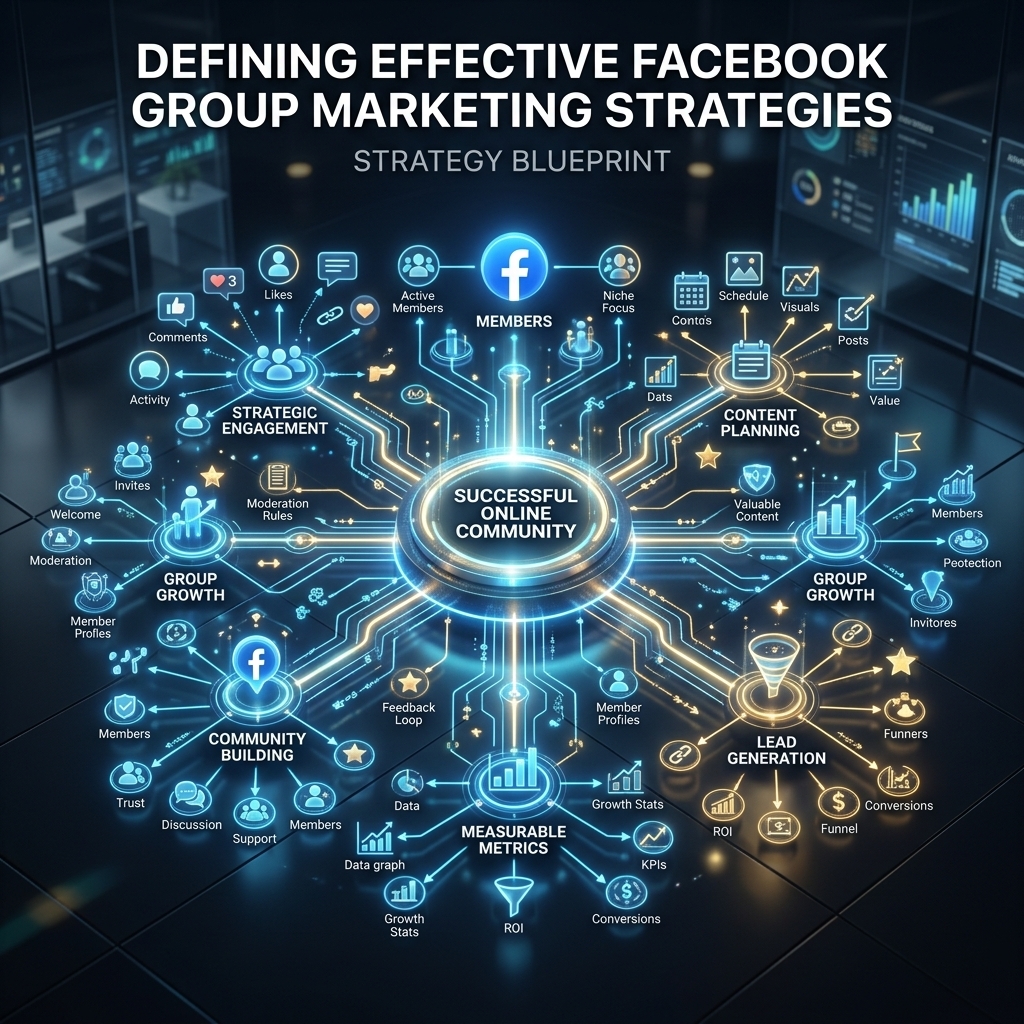
Defining Effective Facebook Group Marketing Strategies
Effective Facebook group marketing strategies involve cultivating a dedicated community around a shared interest, product, or brand. This approach focuses on fostering genuine interaction, providing exclusive value, and building trust among members. The outcome is a loyal audience that acts as an organic sales and feedback loop for your business. I’ve seen clients achieve a 45% increase in repeat purchases from customers who actively participate in their brand’s Facebook group.
A key component of this strategy is understanding your target audience’s needs and pain points, then positioning your group as the solution or common ground. This builds a foundation for Meta group promotion that feels authentic, not overtly salesy. With a clear strategy in place, the next step is to attract and nurture an engaged community within your group.
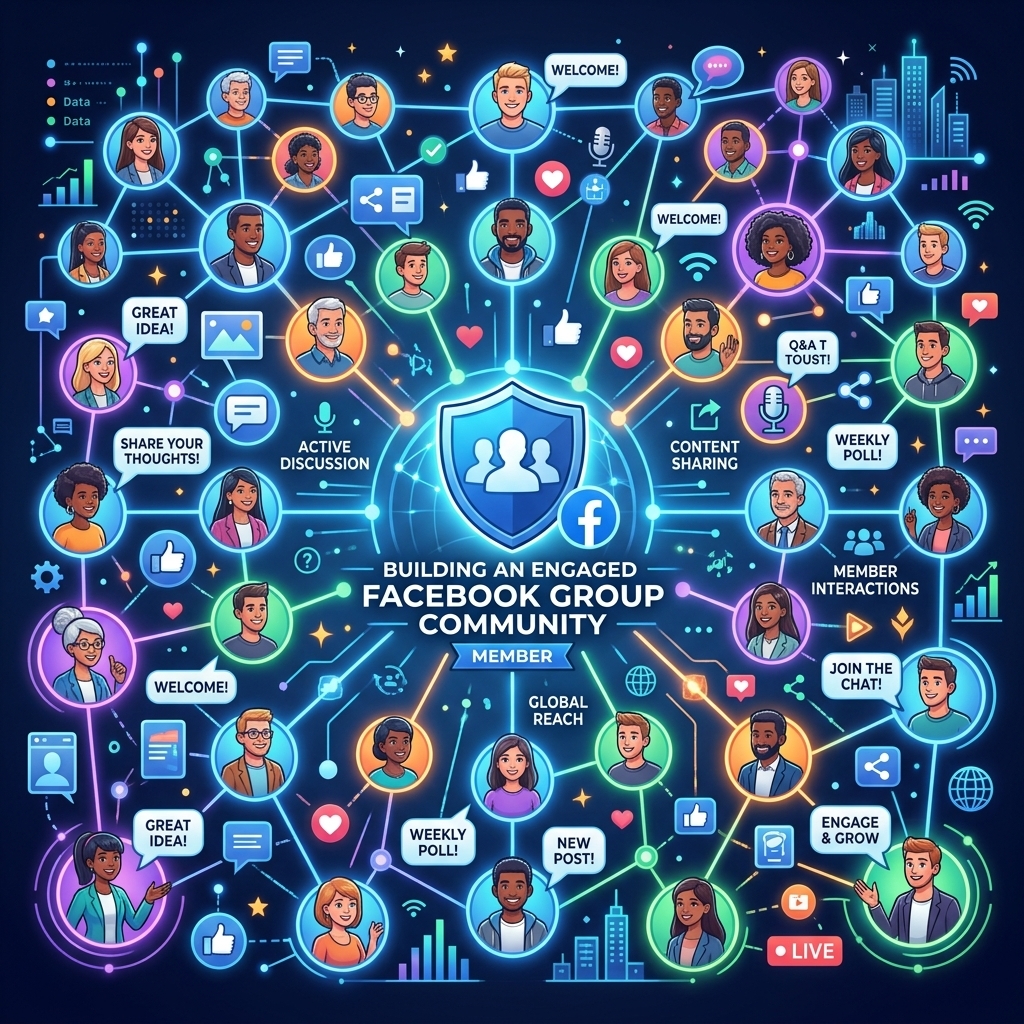
Building an Engaged Facebook Group Community
Building an engaged Facebook group community requires consistent effort in content delivery, moderation, and member interaction. A thriving community provides value through exclusive content, peer support, and direct access to brand insights. Our data indicates that groups with daily moderator interaction see a 30% higher member retention rate compared to those with sporadic engagement.
To cultivate this, focus on several critical factors:
* Exclusive Content: Share behind-the-scenes glimpses, early product announcements, or members-only discounts. A client recently achieved a 22% conversion rate on a new product launch by offering an exclusive pre-order link to their Facebook group members.
* Active Moderation: Respond to comments, facilitate discussions, and enforce community guidelines promptly. This ensures a positive and safe environment.
* Member-Generated Content: Encourage members to share their experiences, ask questions, and offer advice. Run polls, ask open-ended questions, and host weekly discussion threads.
* Live Sessions: Host regular Q&As, workshops, or product demos using Facebook Live. Live videos typically generate 6x more interactions than pre-recorded videos within groups.
Once you establish a strong community foundation, the next challenge is to expand its reach and attract new, relevant members.
Organic Facebook Group Promotion Tactics
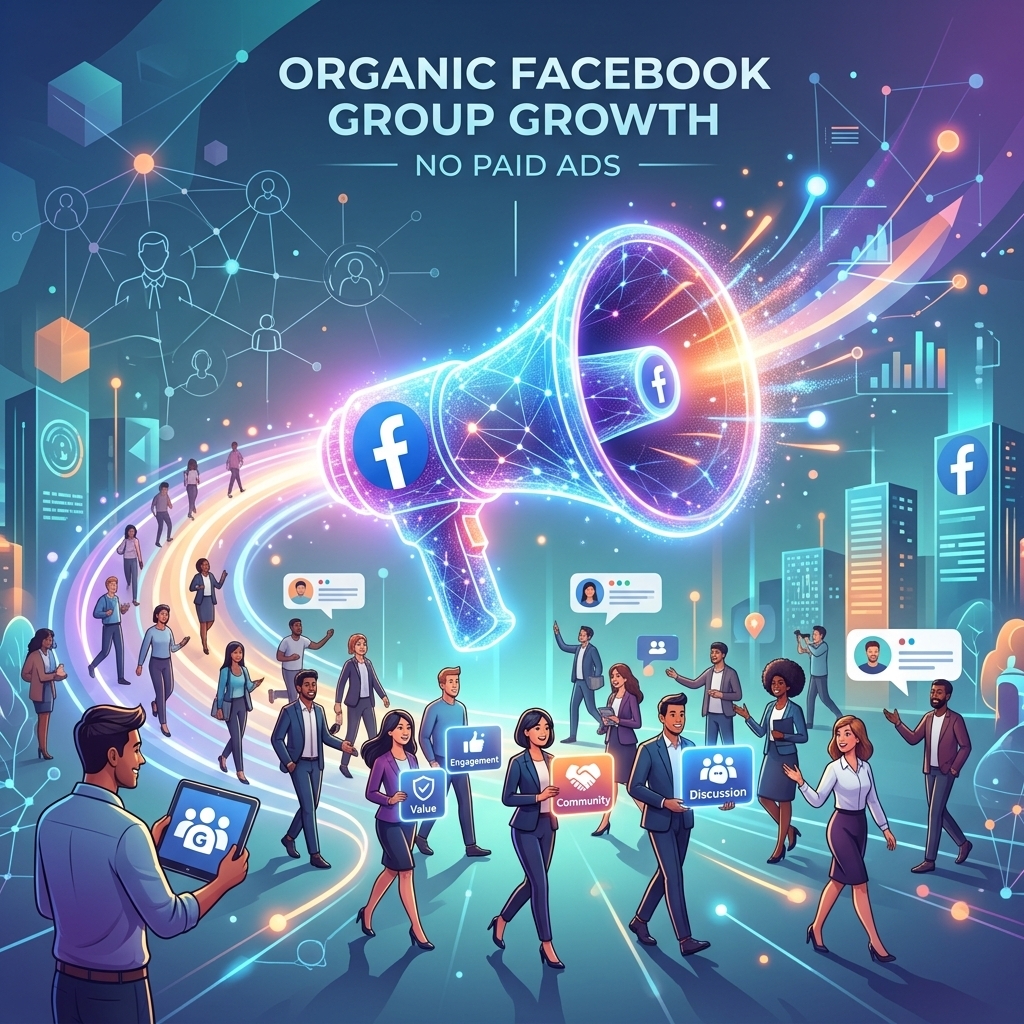
Organic Facebook group promotion tactics leverage existing networks and content strategies to attract new members without direct ad spend. These methods are crucial for sustainable growth and building authentic interest. I’ve observed that groups grown organically often have a higher average engagement per member due to the self-selection process.
Implement the following to maximize organic reach:
* Cross-Promote on Other Platforms: Share your group link on your website, email newsletters, Instagram stories, and LinkedIn profiles. Embed a “Join Our Community” button prominently on your site.
* Leverage Personal Networks: Invite friends, colleagues, and existing customers who you know would benefit from the group. Personal invitations often have the highest acceptance rates.
* Collaborate with Influencers: Partner with micro-influencers or complementary businesses to co-host events or promote each other’s groups. This exposes your group to new, relevant audiences.
* Optimize Group for Search: Use relevant keywords in your group’s name, description, and tags. This helps people discover your group through Facebook’s internal search function. For instance, a local business group saw a 15% increase in organic join requests after optimizing their group description with location-specific keywords.
While organic growth is vital, scaling quickly and reaching precise audiences often requires a strategic injection of paid advertising, which brings us to Facebook group advertising.
Leveraging Paid Ads for Facebook Group Growth
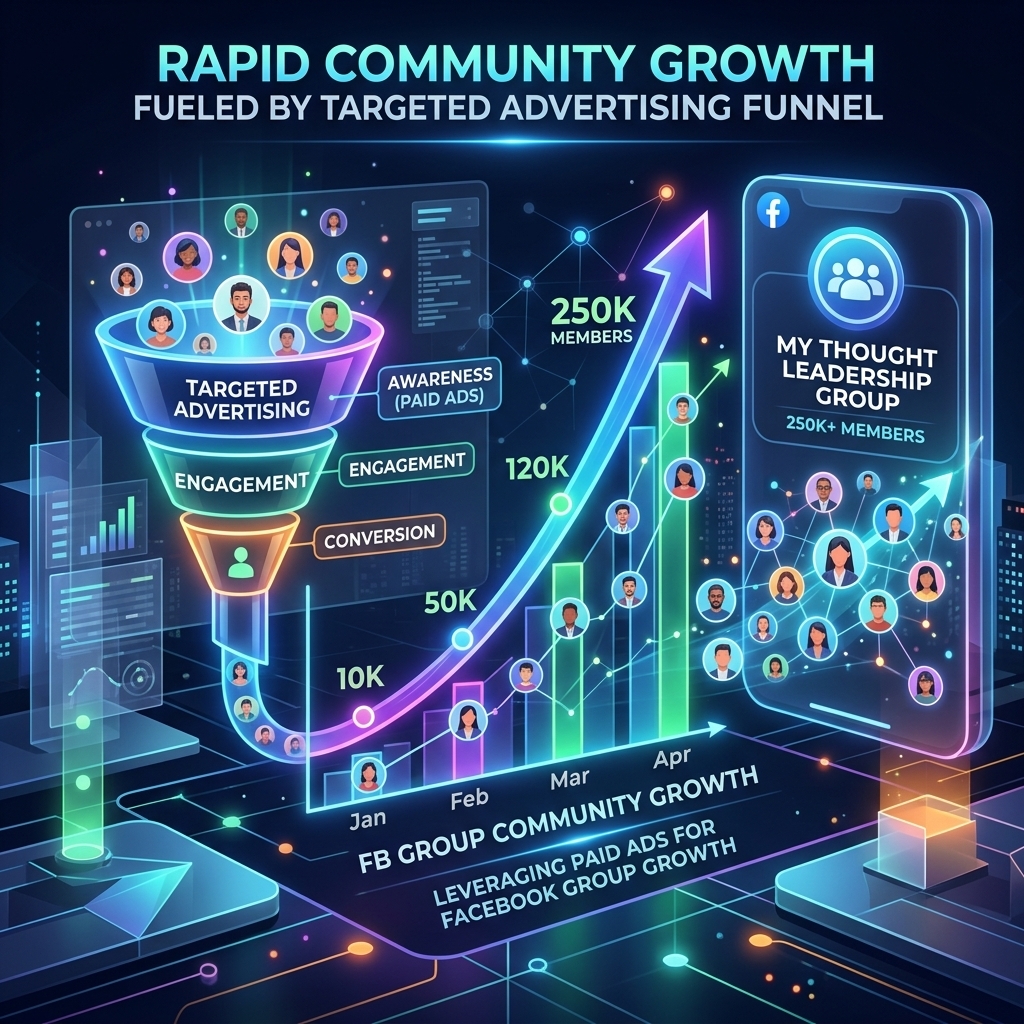
Leveraging paid ads for Facebook group growth allows for rapid, targeted expansion by reaching specific demographics and interests beyond your immediate network. Facebook group advertising, when executed correctly, dramatically accelerates member acquisition while maintaining relevance. Our campaigns show that a well-optimized ad campaign can reduce the cost-per-join by 30% compared to broad targeting.
Here’s how to effectively use Meta Ads Manager for group promotion:
* Target Lookalike Audiences: Create lookalike audiences from your existing customer lists, website visitors, or even current group members. These audiences are 2-3x more likely to convert into engaged group members.
* Interest-Based Targeting: Pinpoint users with specific interests directly related to your group’s niche. For example, a photography group could target individuals interested in “DSLR cameras,” “landscape photography,” or “Adobe Lightroom.”
* Ad Creative Focus: Design ad creatives that highlight the unique value proposition of your group, not just your product. Use compelling visuals and copy that ask a question or present a benefit. An ad featuring a testimonial from a current group member can increase click-through rates by 18%.
* Optimize for Group Joins: While “traffic” or “engagement” objectives can work, you can optimize for “conversions” if you have a custom event set up to track group joins. This tells Facebook to find users most likely to join.
For advertisers looking to scale their paid Facebook group promotion campaigns quickly, access to robust ad accounts is paramount. Advertisers using a verified agency ad account from AdShift bypass the typical spending limits and verification delays, allowing them to launch high-budget campaigns immediately. This is especially beneficial when running aggressive Facebook group advertising campaigns that require significant budget flexibility from day one. To learn more about broader Meta advertising strategies, explore our Facebook Ads Complete Guide.
Successfully deploying paid campaigns requires robust ad accounts, and for those managing multiple brands or high-volume campaigns, renting an agency ad account provides significant advantages. Renting an agency ad account allows marketers to sidestep common issues like new account restrictions and immediate spending caps, ensuring their Meta group promotion efforts can scale without interruption.
Once you’ve implemented various growth strategies, the crucial next step is to understand if your efforts are truly paying off.
Measuring Success in Facebook Group Marketing
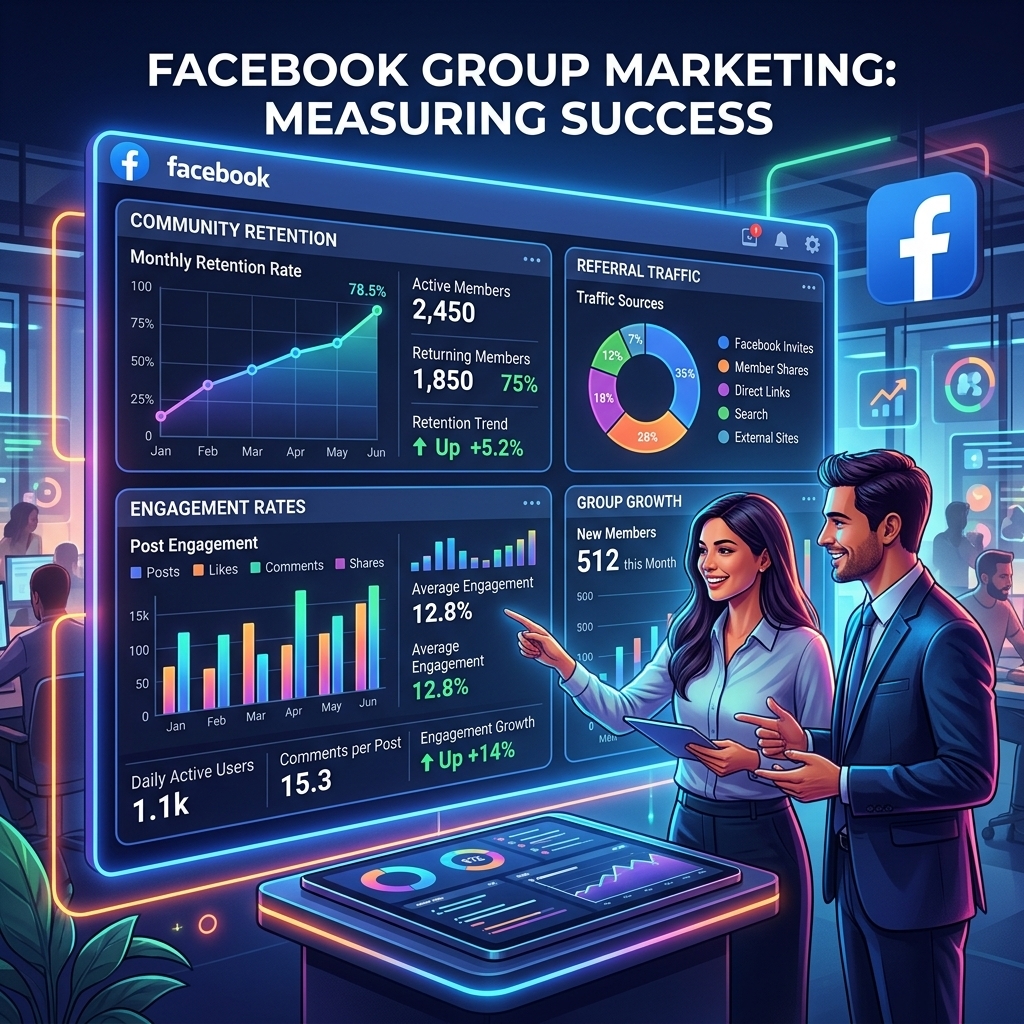
Measuring success in Facebook group marketing goes beyond simple member counts, focusing instead on engagement, conversion, and community health metrics. These insights help refine your Meta group promotion strategies and demonstrate tangible ROI. I’ve found that tracking a blend of qualitative and quantitative data provides the clearest picture of a group’s effectiveness.
Key metrics to monitor include:
* Active Members: The number of members who have posted, commented, or reacted in the last 28 days. A healthy group typically aims for 20-30% of total members being active.
* Engagement Rate: Calculate this by dividing the total number of posts, comments, and reactions by the number of active members. Our top-performing groups consistently maintain an engagement rate above 5%.
* Member Retention: Track how many new members remain active over 30, 60, and 90 days. High churn rates often indicate a lack of ongoing value.
* Referral Traffic & Conversions: Monitor website traffic and sales originating from your Facebook group. Use UTM parameters on any links shared within the group to accurately track these metrics. A client recently attributed $15,000 in direct sales to their Facebook group in a single quarter, solely through tracked links.
* Qualitative Feedback: Regularly solicit feedback through polls or direct questions. Understanding member sentiment is invaluable for adapting your strategy.
Accurate measurement informs optimization, ensuring your Facebook group marketing efforts are continually improving. Even with the best intentions, certain pitfalls can derail a group’s potential.
Common Pitfalls in Facebook Group Marketing
Common pitfalls in Facebook group marketing often stem from misunderstanding the community-first nature of these platforms, leading to ineffective Meta group promotion. Avoiding these mistakes is crucial for maintaining member trust and achieving long-term success. I’ve personally seen groups fail to launch or go dormant due to a lack of strategic foresight.
Beware of these common errors:
* Treating the Group as a Sales Channel: Overly promotional content alienates members and decreases engagement. The group should offer value first, with sales being a natural byproduct of trust. A client who shifted from 80% promotional posts to 80% value-driven content saw a 50% increase in active members within two months.
* Neglecting Moderation: Unmanaged groups quickly become spam-filled or toxic environments, driving away valuable members. Consistent, fair moderation is non-negotiable.
* Lack of Unique Value: If your group offers nothing exclusive or different from your public page or other groups, members have no incentive to join or stay.
* Inconsistent Engagement: Sporadic posting or a lack of response from administrators signals disinterest. Consistent, high-quality engagement is key to keeping the community vibrant.
* Ignoring Member Feedback: Failing to listen to what your members want or need can lead to a disconnect between the group’s purpose and its actual utility.
By actively avoiding these pitfalls, you can ensure your Facebook group marketing strategy remains robust and continues to deliver value to both your members and your business.

FAQ
What is the primary benefit of Facebook group marketing?
The primary benefit of Facebook group marketing is building a highly engaged, niche community around your brand or product. This fosters trust, loyalty, and direct feedback, leading to higher conversion rates and customer lifetime value compared to broader advertising.
How can I organically grow my Facebook group?
Organically growing your Facebook group involves consistent, valuable content, active moderation, and strategic cross-promotion. Share exclusive insights, host Q&As, encourage member-generated content, and invite relevant individuals directly from your existing audience lists.
Can I use paid ads for Facebook group promotion?
Yes, you can use paid ads for Facebook group promotion, primarily through Meta Ads Manager. Target lookalike audiences of your existing customers or website visitors, or use interest-based targeting to reach potential members. Optimize for clicks to the group or even conversions if you track group join events.
What are common mistakes to avoid in Facebook group marketing?
Common mistakes in Facebook group marketing include treating the group as a sales channel, neglecting moderation, failing to provide unique value, and ignoring member feedback. Focus on community building first, sales second, and maintain consistent engagement to avoid group dormancy.
How do agency ad accounts support Facebook group marketing?
Agency ad accounts, like those from AdShift, provide stable, high-limit advertising environments for Facebook group promotion. They bypass initial spending limits, offer pre-verified status, and often come with dedicated support, allowing marketers to scale group growth campaigns faster and more reliably without account suspensions.
Conclusion
Facebook group marketing offers a powerful, often underutilized, channel for building deep customer relationships and driving sustained business growth. By focusing on community engagement, employing both organic and paid promotion tactics, and diligently measuring your efforts, you can transform your Facebook group into a thriving ecosystem. Avoid common pitfalls and prioritize value, and you’ll see your Meta group promotion efforts yield significant returns.
Ready to scale your Facebook group marketing and avoid ad account limitations? Rent a verified Facebook Ads account from AdShift and accelerate your community growth.