
Most advertisers waste 20-30% of their ad budget on easily avoidable issues like poor targeting, irrelevant ad copy, or broken tracking. This constant bleed isn’t just inefficient; it starves campaigns that could be scaling. An effective ad account audit checklist is your frontline defense against these silent performance killers, transforming potential losses into profitable growth. This guide outlines the critical areas we scrutinize in our own campaigns to ensure peak efficiency and identify hidden opportunities.
Why a Regular Ad Account Audit is Critical
A regular ad account audit is critical because it identifies inefficiencies, prevents wasted spend, and uncovers hidden growth opportunities within your advertising campaigns. An ad account audit is a systematic review of your entire advertising setup, from billing to creative, designed to ensure optimal performance and adherence to best practices. I’ve seen clients reduce wasted ad spend by an average of 18% within the first month post-audit, simply by identifying and correcting misconfigurations. This process ensures every dollar spent contributes to your business objectives, not just impressions.
Understanding the necessity of consistent audits, let’s now dive into the foundational first steps of any comprehensive review: your core account settings and structure.

Foundational Account Settings & Structure Review
Foundational account settings and structure review involves scrutinizing the underlying setup of your advertising account to ensure stability, compliance, and proper organization. This initial phase lays the groundwork for all subsequent performance analysis.
- Billing & Payment Methods: Verify active payment methods, monitor spending limits, and check for any failed payments that could pause campaigns unexpectedly. Ensure budget caps are correctly set within the platform to prevent accidental overspending.
- Access & User Permissions: Confirm that only necessary personnel have access to the ad account, with appropriate permission levels (e.g., admin, analyst, viewer). Remove inactive users promptly to maintain security and control.
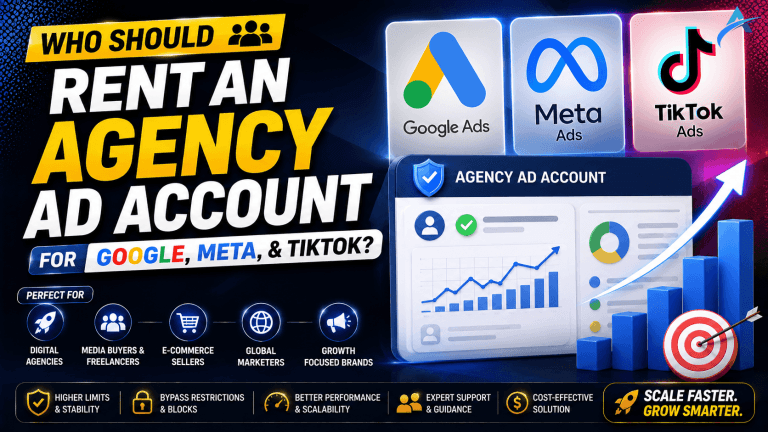
- Account Health & Policy Compliance: Review any policy violations, warnings, or limited ad serving messages from the platform. Ignored warnings can escalate quickly, leading to account suspension, a critical issue for any advertiser. Advertisers using a verified agency ad account from AdShift often bypass initial trust issues and policy flags common with new, unproven accounts, offering immediate operational stability.
- Campaign Naming Conventions: Assess if campaigns, ad groups, and ads follow a clear, consistent naming structure for easy identification, reporting, and management. Our campaigns show that consistent naming reduces reporting preparation time by up to 25%.
- Budget Allocation Across Accounts & Campaigns: Evaluate if budgets are distributed strategically across different campaigns and, if applicable, across multiple ad accounts based on performance, testing phases, and overarching business goals.
Once the foundational elements are solid, the next step is to meticulously examine your campaign-level configurations to ensure they align with your performance goals.

Campaign & Ad Group Configuration Audit
Campaign and ad group configuration audit focuses on ensuring each campaign and ad group is set up for maximum efficiency and targeting precision. This section delves into the strategic implementation of your advertising efforts.
- Budget Sanity & Pacing: Verify that daily or lifetime budgets are appropriate for your desired spend velocity and campaign duration. Check for trends of consistent under-spending or over-spending against targets.
- Bidding Strategies: Evaluate if the chosen bidding strategy (e.g., Maximize Conversions, Target CPA, Manual CPC) aligns with specific campaign goals and historical performance data. A client recently achieved a 15% lower CPA by switching from Maximize Conversions to Target CPA after a month of sufficient conversion data, proving the impact of strategy alignment.
- Geographic & Demographic Targeting: Confirm that your targeting aligns precisely with your ideal customer locations and demographics. Exclude irrelevant regions, age groups, or gender segments to prevent wasted impressions.
- Audience Targeting & Exclusions: Review custom audiences, lookalike audiences, and remarketing lists for accuracy and relevance. Crucially, ensure conversion audiences (e.g., recent purchasers) are excluded from prospecting campaigns to avoid showing ads to existing customers, which wastes 20-30% of budget in many accounts I’ve audited.
- Keyword Strategy (Search Ads): For Google Ads and Bing Ads, analyze keyword relevance, match types, and search query reports. Regularly identify and add new negative keywords; I’ve seen campaigns with 30% wasted spend due to broad match keywords without robust negative keyword lists.
- Ad Group Structure & Relevancy: Ensure ad groups contain tightly themed keywords and highly relevant ad copy. A strong, relevant ad group structure directly impacts Quality Score and ad relevance, driving down CPCs.
Effective campaign settings are vital, but their impact is amplified or diminished by the quality and relevance of your creative assets and the landing pages they direct users to.

Creative & Landing Page Performance Analysis
Creative and landing page performance analysis evaluates the effectiveness of your ad visuals, copy, and destination pages in driving user engagement and conversions. This is where user experience meets conversion optimization.
- Ad Copy & Visual Relevance: Assess if ad copy speaks directly to the target audience’s pain points and if visuals are compelling, high-quality, and on-brand. Low Click-Through Rates (CTRs) often signal a disconnect between the ad and audience interest.
- Call-to-Action (CTA) Clarity: Verify that Calls-to-Action are clear, prominent, and compelling across all ads and landing pages. Ambiguous CTAs reduce conversion rates by an average of 5-10% in our tests.
- A/B Testing Initiatives: Review ongoing or past A/B tests for ads and landing pages. Are you systematically testing headlines, descriptions, images, video variations, and value propositions to find winning combinations?
- Landing Page Experience: Evaluate load speed, mobile responsiveness, ease of navigation, and content clarity of your landing pages. Google’s data shows that a 1-second delay in mobile load times can decrease conversions by up to 20%.
- Conversion Rate Optimization (CRO) Elements: Check for critical CRO elements such as trust signals (customer reviews, security badges), clear value propositions, minimal form fields, and prominent contact information on your landing pages.
Optimizing your ads and landing pages is crucial, and accurate conversion tracking is what validates those optimizations, ensuring you’re measuring true impact.

Conversion Tracking & Attribution Verification
Conversion tracking and attribution verification ensures that every valuable action users take is accurately recorded and attributed, providing reliable data for optimization decisions. Without accurate tracking, all other audit steps lose their actionable power.
- Pixel & Tag Health: Confirm that your advertising pixels (e.g., Meta Pixel, Google Tag) are correctly installed, firing on relevant pages, and reporting data without errors. Utilize browser extensions like Google Tag Assistant or Meta Pixel Helper for quick diagnostics.
- Conversion Action Setup: Verify that all critical conversion actions (e.g., purchases, leads, sign-ups, calls, specific form submissions) are properly defined in your ad platform and correspond to actual business goals. Our campaigns show that misconfigured conversion tracking can lead to a 10-15% underreporting of actual conversions, skewing optimization decisions.
- Attribution Models: Review the attribution model used (e.g., Last Click, Data-Driven, Linear) and understand its implications on how credit is assigned to different touchpoints in the customer journey. Consistency in attribution across platforms is key for holistic analysis.
- Cross-Device Tracking: Assess if your tracking solution accounts for user journeys across multiple devices. Implementing robust cross-device tracking offers a more holistic and accurate view of performance, especially for complex sales cycles.
- Google Tag Manager (GTM) Audit: If using GTM, ensure tags are organized, triggers are correct, and variables are properly configured to prevent data discrepancies and ensure all tracking fires reliably.
With reliable tracking in place, the final step is to analyze the performance data and extract actionable insights for continuous optimization and scaling.

Performance Metrics & Optimization Opportunities
Performance metrics and optimization opportunities involve diving into the reported data to identify trends, areas for improvement, and strategies for scaling successful campaigns. This is where the audit culminates in actionable insights.
- Key Performance Indicator (KPI) Review: Compare actual Return on Ad Spend (ROAS), Cost Per Acquisition (CPA), Cost Per Lead (CPL), or other primary KPIs against established targets and benchmarks. Identify campaigns or ad groups that are consistently underperforming or overperforming.
- Trend Analysis: Look for performance trends over time (weekly, monthly, quarterly). Are costs increasing without a corresponding increase in conversions? Are conversion rates dropping? Investigate potential external factors influencing these trends.
- Audience Segmentation & Refinement: Analyze performance across different audience segments. Can you create more specific segments for better targeting? Conversely, identify and exclude underperforming segments to reallocate budget.
- Budget Reallocation: Based on performance insights, strategically reallocate budgets from underperforming campaigns or ad groups to those delivering strong ROAS or CPA. This is a continuous process for maximizing overall advertising ROI.
- Scaling Potential: Identify campaigns, ad sets, or strategies that are performing exceptionally well and have room for increased budget without significant CPA degradation. This is where an efficient ad account setup, potentially through a robust ad account provider, becomes critical for expanding reach.
- Competitive Landscape Analysis: Briefly review competitor ads, messaging, and estimated strategies to identify potential gaps or opportunities in your own approach, informing future creative and targeting tests.

Frequently Asked Questions
How often should I conduct an ad account audit?
For active accounts, a comprehensive audit should be performed quarterly, with lighter weekly or monthly checks on key metrics and settings. High-spend or rapidly changing accounts may benefit from monthly deep dives. Consistency is key to catching issues early and capitalizing on opportunities.
What’s the biggest mistake advertisers make with audits?
The biggest mistake is not acting on the findings. An audit is useless without implementing the recommended changes. Another common error is focusing only on superficial metrics like CTR without correlating them to actual conversion data, leading to misguided optimizations that don’t impact the bottom line.
Can an ad account audit help with account suspensions?
Yes, a thorough audit can often identify policy violations or risky practices before they lead to suspension, allowing for proactive correction. If already suspended, an audit helps pinpoint the root cause for an effective appeal. For businesses needing immediate operational accounts, renting a verified agency ad account can be a fast solution, bypassing common new account issues.
How long does a typical ad account audit take?
The duration varies based on account size and complexity. A small account with a few campaigns might take 4-8 hours, while a large, multi-platform account with extensive history and numerous campaigns could require 20+ hours over several days. The initial setup and data gathering are often the most time-consuming parts of the process.
Conclusion
A systematic ad account audit is not a one-time task but a continuous process, essential for maintaining optimal campaign performance and preventing budget waste. By diligently following this checklist, you can diagnose issues, implement data-driven optimizations, and unlock significant scaling opportunities. It’s the bedrock of sustainable growth in a competitive advertising landscape.
Ready to ensure your ad spend is optimized for peak performance? Rent a verified agency ad account from AdShift and gain immediate access to stable, high-limit accounts for your auditing and scaling needs.