
Most e-commerce businesses leave significant revenue on the table by underestimating the power of a fully optimized Google Ads strategy. Data shows that businesses with comprehensive Google Shopping campaigns can achieve up to 3x higher conversion rates than those relying solely on generic search ads. This guide breaks down the critical components of Google Ads e-commerce success: from product feed optimization and strategic campaign structuring to advanced bidding, intelligent audience segmentation, and continuous iteration for sustained growth.
Optimizing Product Feed for Google Shopping Ads
Google Shopping Ads optimizes product feed by ensuring data accuracy and completeness, which directly impacts ad visibility and relevance. A product feed is a comprehensive file containing all product information (ID, title, description, price, image, etc.) that Google uses to generate Shopping ads; its optimization leads to higher ad quality scores and better click-through rates. Key attributes like product title and image are critical; titles should include brand, product type, and key features. High-quality, clear images drive clicks. Attributes like GTINs, MPNs, and brand ensure product matching. Custom labels allow for granular segmentation (e.g., “seasonal_sale”, “high_margin_item”). I’ve seen campaigns where a 15% improvement in product title optimization led to a 20% CTR increase and a 10% reduction in CPC for specific product categories. Regularly auditing your feed for disapprovals and missing attributes is essential for maintaining performance.
After optimizing the product feed to ensure accurate and compelling listings, the next critical step is structuring your Google Ads e-commerce campaigns to effectively target your audience and sales goals.

Structuring Effective Google Ads E-commerce Campaigns
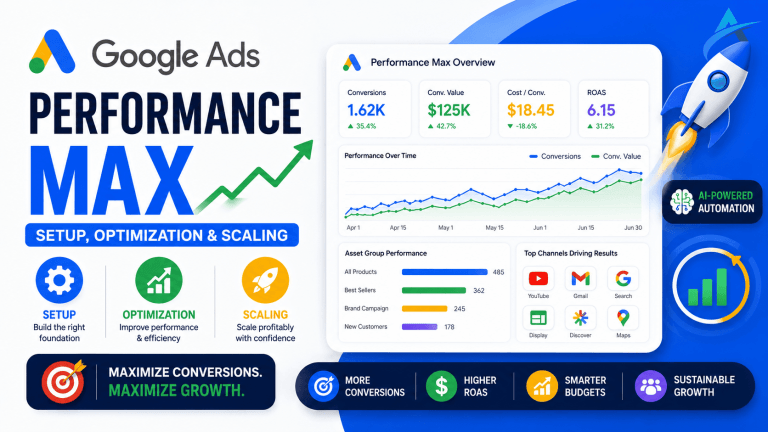
Google Ads e-commerce campaigns structure involves choosing the right campaign types and organizing ad groups to maximize reach and ROAS. Effective campaign structuring in e-commerce means strategically deploying campaign types like Performance Max, Standard Shopping, and Search campaigns to cover the entire customer journey, resulting in more targeted traffic and higher conversion rates. Performance Max campaigns, for instance, leverage AI across all Google channels to find converting customers, while Standard Shopping offers more control over bids and negative keywords. Our campaigns show that combining PMax for broad reach with targeted branded Search campaigns can yield a 3.5x ROAS for new product launches, especially when leveraging an agency ad account that can handle higher spending limits from the start. Advertisers using a verified agency ad account from AdShift often bypass the initial spending limits, allowing for quicker data accumulation and optimization crucial for these complex structures.
With a solid campaign structure in place, the focus shifts to advanced bidding strategies and meticulous budget management to ensure profitability. Ready to scale your Google Ads with a high-limit account? Rent a Google Ads agency account from AdShift.

Advanced Bidding & Budget Management for E-commerce
Advanced bidding and budget management for e-commerce focuses on maximizing return on ad spend (ROAS) through intelligent automation and strategic adjustments. This involves employing smart bidding strategies like Target ROAS or Maximize Conversion Value, coupled with dynamic budget allocation, to ensure ad spend is directed towards the most profitable opportunities, leading to improved overall campaign profitability. Target ROAS, for example, is ideal for e-commerce as it automatically optimizes bids to achieve a specified return on your ad spend. Seasonality adjustments are critical; increasing budgets and ROAS targets during peak sales periods (e.g., Black Friday) can capture significant demand, while lowering them during off-peak times prevents wasteful spending. A client recently achieved a 4.8x ROAS by implementing a dynamic Target ROAS strategy combined with daily budget checks and utilizing Google’s seasonality bid adjustments. Staying updated on the latest Google Ads best practices, as covered in a comprehensive Google Ads guide, helps refine these strategies.
While smart bidding optimizes for conversions, understanding and segmenting your audience unlocks even greater potential for e-commerce growth.

Leveraging Audience Segments for E-commerce Growth
Leveraging audience segments for e-commerce growth involves targeting specific user groups based on their past interactions and demographics to increase conversion rates. Audience segmentation allows advertisers to tailor ad messages and bids to users who have shown particular interest or intent, leading to more relevant ad experiences and higher conversion rates. Critical segments include remarketing lists for abandoned cart users (who often have a 10-15% conversion rate with targeted ads), product page viewers, and past purchasers (excluding them from prospecting campaigns or targeting them with complementary products). Customer Match lists, often uploaded via a secure agency ad account, allow you to target existing customer email lists directly with specific offers. I’ve consistently seen remarketing campaigns achieve 5-7x higher conversion rates than prospecting campaigns, especially for abandoned cart segments with a well-crafted offer.
Beyond initial targeting, the final and ongoing step for sustained success in e-commerce is rigorous measurement and continuous iteration. To facilitate robust audience targeting and higher spend, consider to rent an agency ad account.

Measuring & Iterating for Sustained E-commerce Success
Measuring and iterating for sustained e-commerce success requires robust conversion tracking, in-depth analytics, and continuous A/B testing of campaign elements. This process involves setting up accurate conversion tracking (e.g., Google Analytics 4 e-commerce tracking), analyzing performance data, and systematically testing different ad creatives, landing pages, and bidding strategies to incrementally improve ROAS and overall profitability. Attribution models (e.g., data-driven) help understand which touchpoints contribute most to conversions. Regularly A/B testing ad headlines, descriptions, and images can yield significant performance lifts; a recent test increased CTR by 18% for a retail client by simply changing the primary image in their responsive search ads.

FAQ: Google Ads E-commerce
What is the best Google Ads campaign type for e-commerce?
For e-commerce, Performance Max campaigns are highly effective as they leverage AI across all Google channels to find converting customers. Standard Shopping campaigns offer more control, while branded Search campaigns capture high-intent traffic. A combination often yields the best ROAS, targeting users at different stages of the buying journey.
How often should I optimize my product feed?
Your Google Shopping product feed should be continuously monitored and optimized. Daily checks for disapprovals are crucial. Regular optimization of titles, descriptions, images, and custom labels should occur at least weekly, especially before promotions or seasonal sales, to ensure maximum relevance and performance.
What is a good ROAS for e-commerce on Google Ads?
A ‘good’ ROAS (Return on Ad Spend) for e-commerce on Google Ads varies significantly by industry, product margin, and business goals. A common benchmark many businesses aim for is a 3:1 or 4:1 ROAS, meaning for every $1 spent on ads, you generate $3 or $4 in revenue. High-margin products might target lower ROAS, while low-margin products need higher.
How do agency ad accounts help e-commerce businesses?
Agency ad accounts, like those offered by AdShift, provide several advantages for e-commerce businesses. They often come with higher spending limits, bypassing the initial restrictions faced by new accounts, which allows for quicker scaling and data accumulation. They also offer a layer of stability, reducing the risk of account suspensions and providing a verified environment for uninterrupted campaign execution.
Conclusion
Mastering Google Ads for e-commerce is not a one-time setup; it’s an ongoing process of optimization, testing, and strategic adjustment. From a meticulously optimized product feed to intelligently structured campaigns, advanced bidding strategies, precise audience targeting, and continuous measurement, each element plays a crucial role in driving profitability for your online store. By implementing these data-driven approaches, you can significantly boost your ROAS and achieve scalable growth.
Ready to unlock explosive growth for your online store? Rent a verified Google Ads agency account from AdShift and gain access to higher spending limits and expert support.