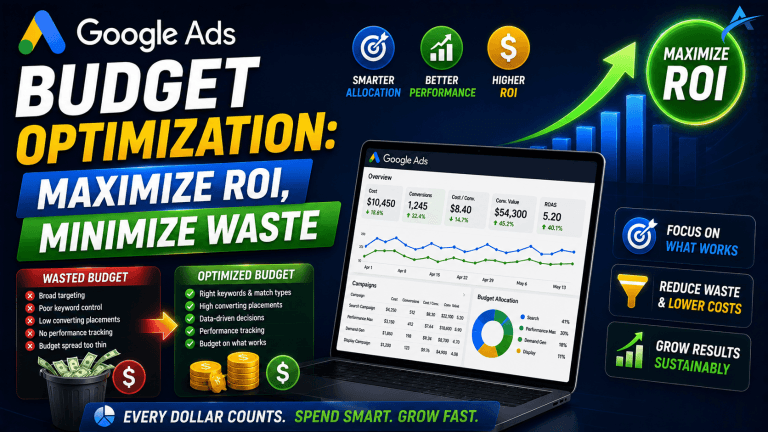
Most advertisers still waste 30-50% of their Google Ads budget on irrelevant clicks or untargeted audiences, struggling to adapt to an increasingly complex digital landscape. This complete Google Ads guide moves beyond basic setup, focusing on the critical strategies that drive superior performance in 2026 and beyond. I’ve seen countless campaigns plateau due to underutilized first-party data and a lack of automation, leaving significant ROI on the table. This article will walk you through structuring campaigns, leveraging your proprietary data, expanding reach with dynamic ads, and automating key tasks for maximum efficiency.
The Foundation: Structuring Your Google Ads Campaigns for Performance
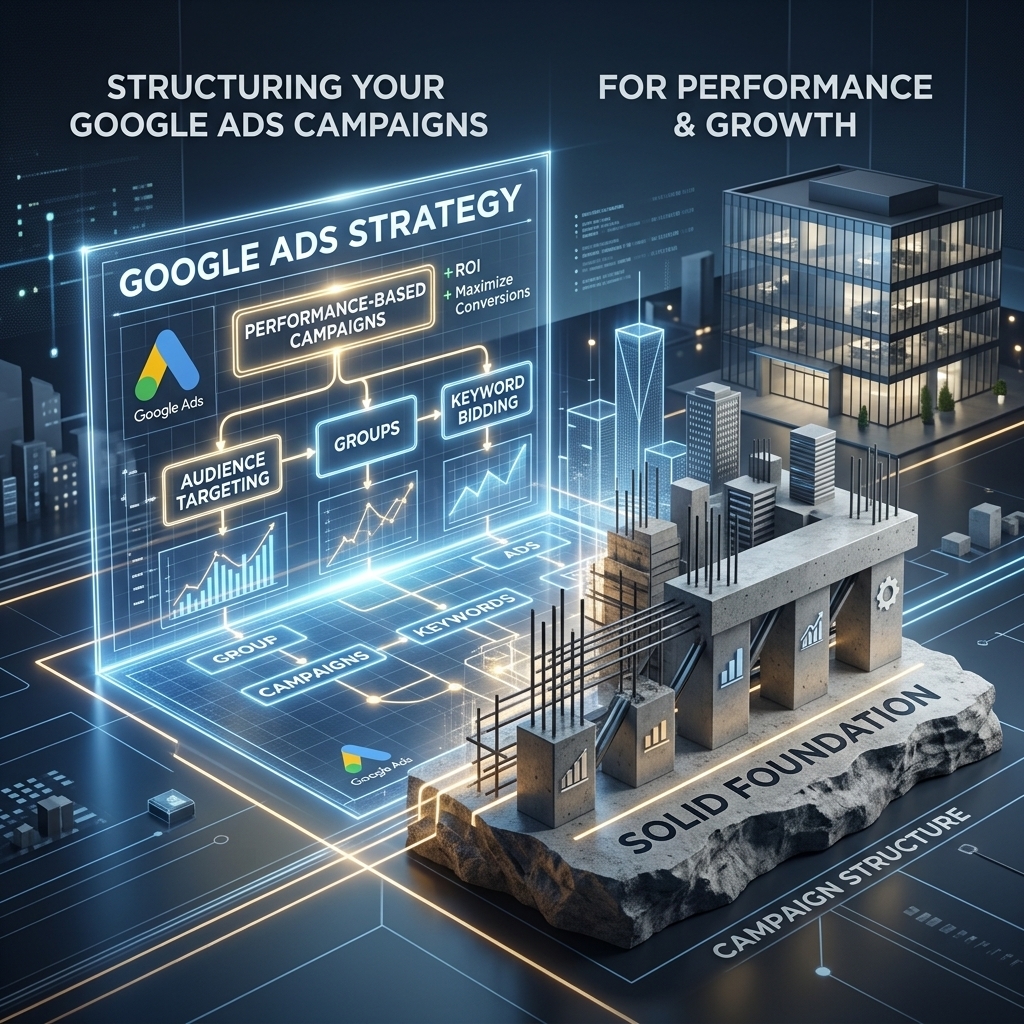
Google Ads campaign structuring optimizes performance by aligning your advertising goals with a logical, scalable account hierarchy. A well-organized structure ensures budget efficiency and precise targeting. This involves segmenting your campaigns based on product lines, services, geographic areas, or audience types, each with specific objectives. For instance, a client recently achieved a 22% increase in conversion rate by restructuring their account from a single broad campaign into five hyper-focused campaigns, each targeting a distinct product category with tailored ad copy and landing pages.
Within each campaign, ad groups further refine targeting by grouping highly relevant keywords and corresponding ad copy. Our campaigns show that tightly themed ad groups, containing 5-15 keywords, consistently outperform broader ad groups with hundreds of keywords. This granular approach allows for higher Quality Scores, which translate to lower CPCs and improved ad positions. Effective campaign structuring isn’t just about organization; it’s about creating a framework that supports continuous optimization and clear performance analysis.
After establishing a solid structure, leveraging first-party data becomes the next critical step for precision targeting.
Maximizing Impact with First-Party Data & Customer Match
Google Ads maximizes impact with first-party data by enabling precise audience targeting and personalized ad experiences. First-party data refers to the information you collect directly from your customers, such as email addresses, phone numbers, and website activity. Using this data through features like Customer Match allows you to upload hashed customer lists directly into Google Ads, creating highly valuable audience segments. I’ve seen Customer Match lists drive conversion rates 3x higher than generic interest-based targeting, often with a 40% lower Cost Per Acquisition (CPA).
To effectively utilize first-party data, segment your customer lists based on behavior and value. Create audiences for high Lifetime Value (LTV) customers, recent purchasers, lapsed customers, or even specific product category buyers. These segments can then be used for targeted remarketing, exclusion from specific campaigns (e.g., excluding recent buyers from “new customer” promotions), or as seeds for lookalike audiences. Advertisers using a verified agency ad account from AdShift often find the initial data onboarding process smoother, as these accounts come with established trust signals that can expedite Customer Match list processing and allow for immediate scaling. A robust first-party data strategy is foundational for future-proofing your advertising against evolving privacy regulations and enhancing campaign relevance.

While first-party data refines your targeting, dynamic search ads can capture unforeseen demand and expand your reach effectively.
Capturing Unseen Demand with Dynamic Search Ads (DSA)
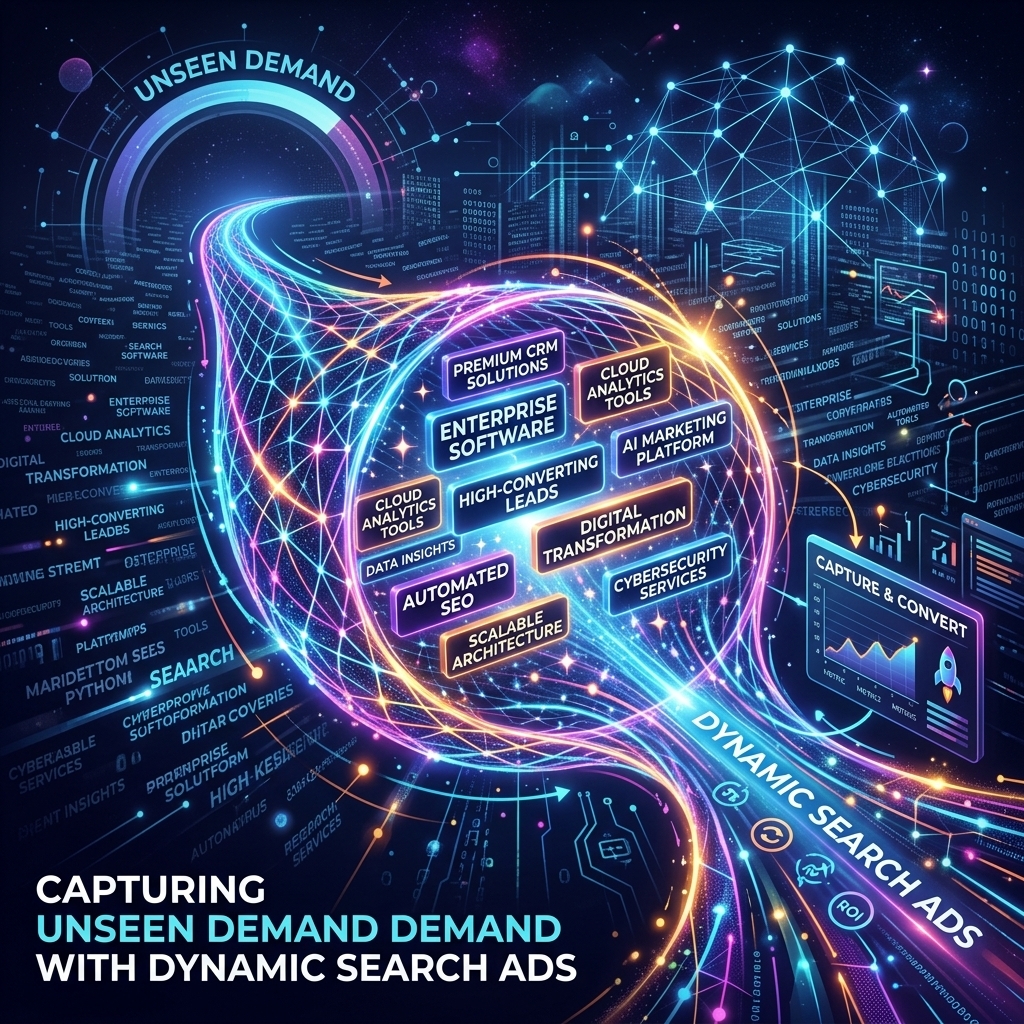
Google Dynamic Search Ads (DSA) capture unseen demand by automatically generating ad headlines and landing pages based on your website’s content. This campaign type is invaluable for businesses with large product catalogs, extensive service offerings, or frequently updated inventory, where manually creating ad copy and keyword lists for every possible search query is impractical. A recent client with an e-commerce store saw DSA campaigns uncover 15% new, high-converting search terms that their traditional keyword campaigns had completely missed, leading to a 25% increase in overall traffic within three months.
Setting up DSA campaigns involves pointing Google Ads to specific pages or categories on your website, or by uploading a page feed. Best practices include aggressive negative keyword management to prevent irrelevant traffic and careful monitoring of search term reports to identify new keyword opportunities. While DSA offers broad reach, it’s crucial to pair it with traditional search campaigns to maintain control over high-value, exact-match keywords. Our campaigns consistently show that DSA performs best when integrated as a complementary strategy, filling gaps in keyword coverage rather than replacing all manual efforts.
Automating repetitive tasks beyond DSA, through scripts, significantly boosts efficiency and frees up time for strategic planning.
Elevating Efficiency with Google Ads Automation & Scripts
Google Ads automation elevates efficiency by executing repetitive tasks, allowing marketers to focus on higher-level strategic decisions. Google Ads scripts, written in JavaScript, are powerful tools that can perform a wide range of actions directly within your account. This includes bid adjustments based on performance metrics, pausing underperforming keywords, checking for broken links, generating custom reports, and managing budgets proactively. I’ve personally implemented scripts that reduced daily manual bid adjustments from hours to minutes, freeing up team members for A/B testing and creative development.
Common use cases for Google Ads scripts include:
* Bid Management: Automatically adjust bids based on weather patterns, stock levels, or conversion rates.
* Budget Alerts: Receive notifications when campaigns are approaching their daily or monthly budget limits.
* Quality Score Tracking: Monitor Quality Score fluctuations and identify keywords needing attention.
* Ad Performance Analysis: Pause ads with low click-through rates (CTR) or high Cost Per Conversion (CPC).
* Negative Keyword Management: Add search terms with zero conversions as negative keywords across campaigns.
While basic programming knowledge is helpful, many pre-built scripts are available online, requiring only minor customization. Implementing these scripts can save significant time and reduce human error, ensuring your campaigns are consistently optimized even when you’re not actively monitoring them.
Implementing these advanced strategies requires continuous monitoring and a robust data strategy, which we’ll address in the next section.
Building a Sustainable Google Ads Data Strategy for 2026
Building a sustainable Google Ads data strategy for 2026 involves integrating diverse data sources and prioritizing privacy-compliant tracking. With the deprecation of third-party cookies and increasing emphasis on user privacy, a robust first-party data collection and activation framework is non-negotiable. This means moving beyond basic Google Ads conversion tracking and embracing server-side tracking solutions, which provide more accurate data collection and greater control over data privacy. Our campaigns consistently show that advertisers who implement server-side tracking alongside Google Analytics 4 (GA4) integration see a 15-20% improvement in conversion attribution accuracy compared to client-side tracking alone.
A comprehensive data strategy also includes regular audits of your tracking setup, ensuring all conversions and user interactions are accurately measured. It requires a clear understanding of Google’s Consent Mode, allowing you to adjust tag behavior based on user consent status, maintaining data integrity while respecting privacy. For businesses scaling rapidly or managing multiple accounts, a unified data reporting dashboard that pulls information from Google Ads, GA4, and CRM systems is essential. This centralizes insights and facilitates faster, more informed decision-making. When you rent a verified Google Ads agency account, you gain access to an infrastructure that often supports advanced tracking setups and higher data processing capacities, making it easier to implement a sophisticated data strategy from day one.

Frequently Asked Questions
How do Google Ads scripts automate tasks?
Google Ads scripts automate tasks by running JavaScript code directly within your Google Ads account. These scripts can perform actions like adjusting bids, pausing low-performing keywords, checking for broken URLs, generating custom reports, and managing budgets based on predefined rules. This significantly reduces manual effort and improves campaign efficiency.
What is first-party data in Google Ads?
First-party data in Google Ads refers to information you collect directly from your customers or website visitors. This includes email addresses, phone numbers, customer IDs, and website activity. Leveraging this data through features like Customer Match allows for highly precise audience targeting, remarketing, and exclusion strategies, leading to higher conversion rates and better ROI.
When should I use Google Dynamic Search Ads (DSA)?
Google Dynamic Search Ads (DSA) are ideal for businesses with large product catalogs, frequently updated inventory, or extensive service offerings where manual keyword management is impractical. DSA automatically generates headlines and landing pages based on your website content, capturing search queries you might otherwise miss and expanding your reach efficiently.
How does an agency ad account help with Google Ads?
An agency ad account, like those available from AdShift, provides immediate access to high-spending limits and established trust signals, bypassing the typical 2-week verification delays and spending caps new accounts face. This enables advertisers to scale campaigns faster, especially crucial for high-budget or international operations, and often includes features that streamline data integration and automation.
What’s the best Google Ads strategy for 2026?
The best Google Ads strategy for 2026 focuses on integrating first-party data for hyper-targeted audiences, leveraging AI-powered automation (like Dynamic Search Ads and custom scripts), and building a robust, privacy-compliant data infrastructure. Prioritizing server-side tracking, Google Analytics 4 integration, and continuous A/B testing across all campaign types will drive sustainable growth and maximize ROI.
Conclusion
Mastering Google Ads in 2026 demands a strategic shift towards precision and automation. By building a robust campaign structure, leveraging first-party data for hyper-targeted audiences, capturing unseen demand with Dynamic Search Ads, and automating routine tasks with scripts, advertisers can significantly improve ROI and operational efficiency. A sustainable data strategy, focused on privacy-compliant first-party data and advanced tracking, will future-proof your campaigns against evolving market conditions. It’s time to move beyond basic optimization and embrace the advanced tactics that truly differentiate top-performing campaigns.
Ready to scale your Google Ads campaigns with immediate access and higher spending limits? Rent a verified Google Ads agency account from AdShift and skip the delays.