Most advertisers struggle with Google Ads campaign structure, often leading to wasted ad spend and missed conversion opportunities due to poor organization. A chaotic Google Ads account structure can inflate CPCs by 15-20% and depress Quality Scores, directly impacting profitability. This guide details how to build an optimal Google Ads campaign structure, from the overall account hierarchy to granular ad groups and ad rotation settings, ensuring every dollar works harder.
Understanding the Google Ads Hierarchy: Account to Ad Group
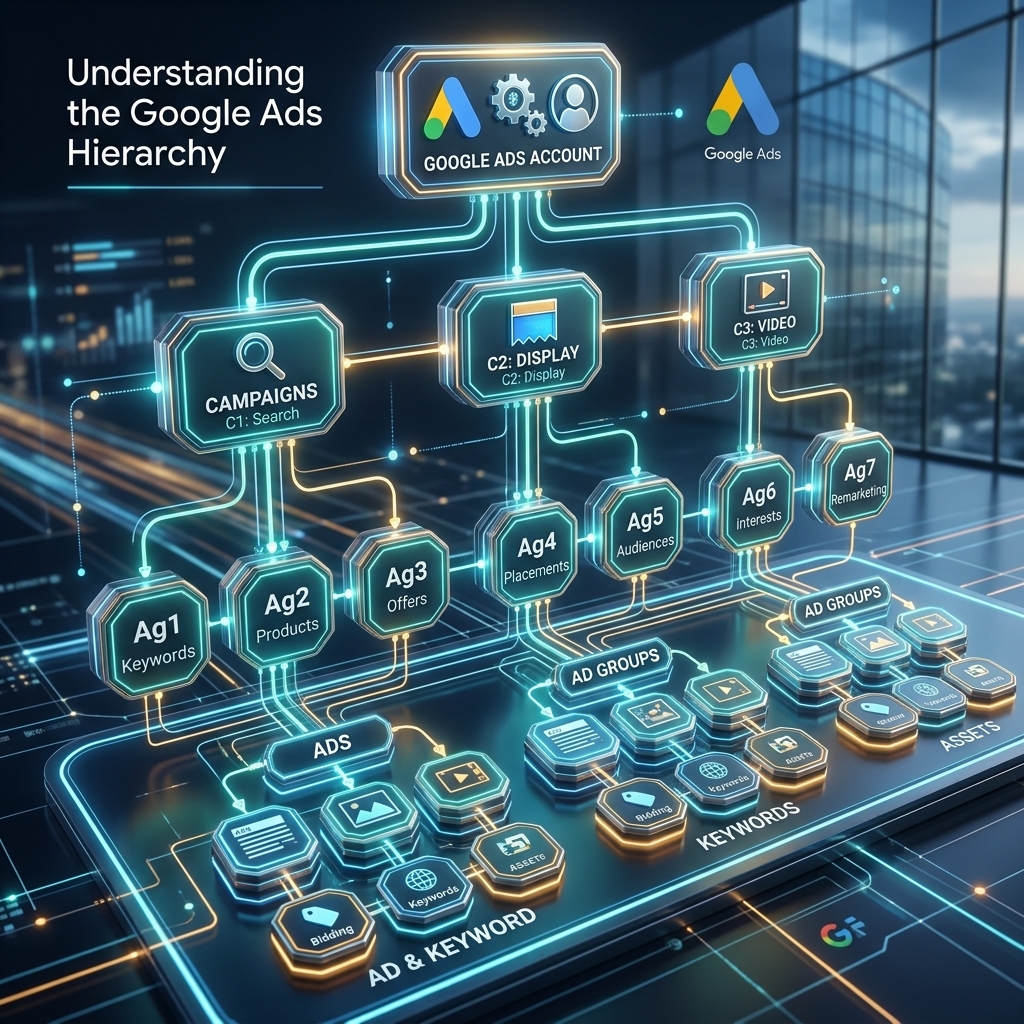
The Google Ads hierarchy defines the organizational levels within your advertising efforts, providing a framework for management and optimization. This Google Ads account structure begins with the optional Manager Account (MCC), followed by individual Google Ads accounts, campaigns, ad groups, and finally, keywords and ads. Each layer serves a distinct purpose, offering granular control over your advertising strategy.
A Manager Account (MCC) sits at the top, allowing agencies or businesses with multiple brands to oversee several Google Ads accounts from a single dashboard. Below the MCC, individual Google Ads accounts house all campaign activity for a specific business or client. Within each account, campaigns are the primary organizational units where budgets, geographic targeting, and campaign types (Search, Display, Shopping, etc.) are set. I’ve seen clients with a clear MCC structure manage over $1M in monthly spend across dozens of accounts with surprising efficiency.
Ad groups reside within campaigns, acting as containers for tightly themed keywords and their corresponding ads. This ad group structure ensures that the ads shown are highly relevant to the user’s search query, which is critical for Quality Score and CTR. Finally, keywords trigger ads, and ads are the creative messages users see. Understanding this complete Google Ads hierarchy is fundamental to building an effective and scalable advertising presence. With a firm grasp of the account hierarchy, the next step involves strategically segmenting your campaigns for optimal performance.
Crafting Effective Campaigns: Strategic Segmentation
Strategic campaign segmentation is crucial for an effective Google Ads campaign structure, allowing advertisers to align their budget, targeting, and messaging with specific business goals. This segmentation involves creating distinct campaigns based on criteria like product categories, geographic locations, audience types, or stages in the sales funnel. For instance, a client selling shoes might have separate campaigns for “running shoes,” “dress shoes,” and “casual shoes,” each with its own budget and targeting parameters.
Each Google Ads campaign should have a clear objective and a dedicated budget. Our campaigns show that segmenting by match type (e.g., one campaign for exact match keywords, another for broad match modified) can improve budget control and performance analysis by up to 10-15%. Geographic targeting is also set at the campaign level, allowing precise reach to specific states, cities, or even postal codes. This level of control ensures that ad spend is directed only to relevant audiences.
Campaign settings dictate ad scheduling, bid strategies, and device targeting. For example, a campaign promoting a lunch special might only run between 11 AM and 2 PM, utilizing a “Maximize Conversions” bid strategy. This strategic segmentation helps organize Google Ads accounts, preventing budget overlap and ensuring that campaigns are optimized for their unique purposes. Once campaigns are strategically segmented, the focus shifts to the ad group layer for even finer granularity and relevance.

The Ad Group Layer: Granularity for High Relevance
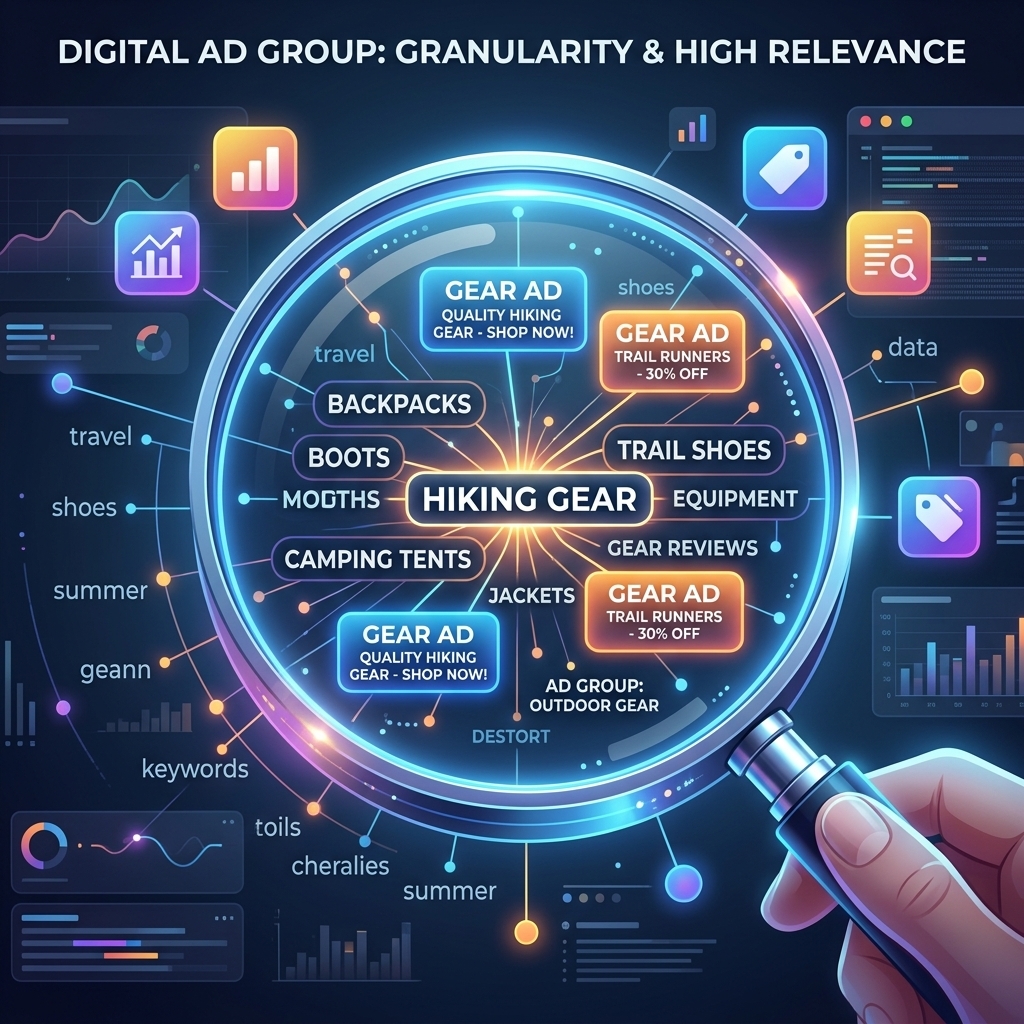
The ad group layer within your Google Ads campaign structure is where true keyword-to-ad relevance is established, significantly impacting Quality Score and conversion rates. This Google Ads ad group structure should be built around tight thematic clusters of keywords, ensuring that every ad served is directly pertinent to the user’s search intent. For example, an ad group for “red running shoes” should only contain keywords related to red running shoes and ads specifically mentioning red running shoes.
Best practices for organizing Google Ad groups often revolve around Single Keyword Ad Groups (SKAGs) or tightly themed ad groups. While SKAGs require more setup, I’ve seen them achieve Quality Scores of 9 and 10, driving CPCs down by 20-30% compared to broader ad groups. SKAGs ensure maximum ad copy relevance, as the ad copy can be written to exactly match the single keyword. Alternatively, tightly themed ad groups group 2-5 very similar keywords together, balancing relevance with manageability.
When structuring Google Ads ad groups, consider the user’s intent. Are they looking for information, comparison, or ready to purchase? Each intent might warrant a separate ad group with tailored messaging. The goal is to maximize the connection between the search query, the keyword, the ad, and the landing page. Advertisers using a verified agency ad account from AdShift often find it easier to implement and manage highly granular ad group structures from the outset, bypassing initial spending limits that can hinder extensive testing. This meticulous ad group structure sets the stage for optimizing your ad copy and aligning it perfectly with your keywords.
Ad Copy & Keyword Alignment
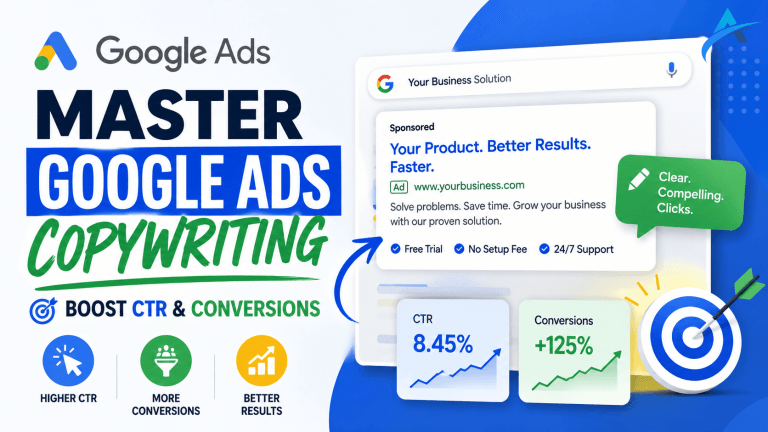
Ad copy and keyword alignment are foundational elements of an effective Google Ads campaign structure, ensuring that your message directly addresses user intent and maximizes ad relevance. This alignment means that the keywords within an ad group should directly inform the headlines, descriptions, and display URL paths of the ads in that same ad group. For example, if an ad group targets “best running shoes for flat feet,” the ad copy should explicitly mention “running shoes,” “flat feet,” and potentially “best.”
Achieving strong keyword alignment involves incorporating your target keywords into your ad copy, especially in headlines and descriptions. Google’s dynamic keyword insertion (DKI) can be a useful tool, but it should be used cautiously to avoid awkward ad copy. Instead, focus on crafting multiple ad variations that naturally integrate your core keywords while highlighting unique selling propositions. Our campaigns show that ads with strong keyword-to-ad copy alignment often see a 5-10% higher Click-Through Rate (CTR) and improved Quality Scores.
Beyond just keywords, consider the user’s journey. Is the ad copy speaking to a problem, offering a solution, or driving a direct sale? Use compelling calls-to-action (CTAs) that are relevant to the keywords and landing page experience. This deep integration between keywords and ad copy not only improves performance but also sets the stage for effective ad testing through strategic ad rotation settings.

Optimizing Ad Rotation: Maximizing Performance & Testing
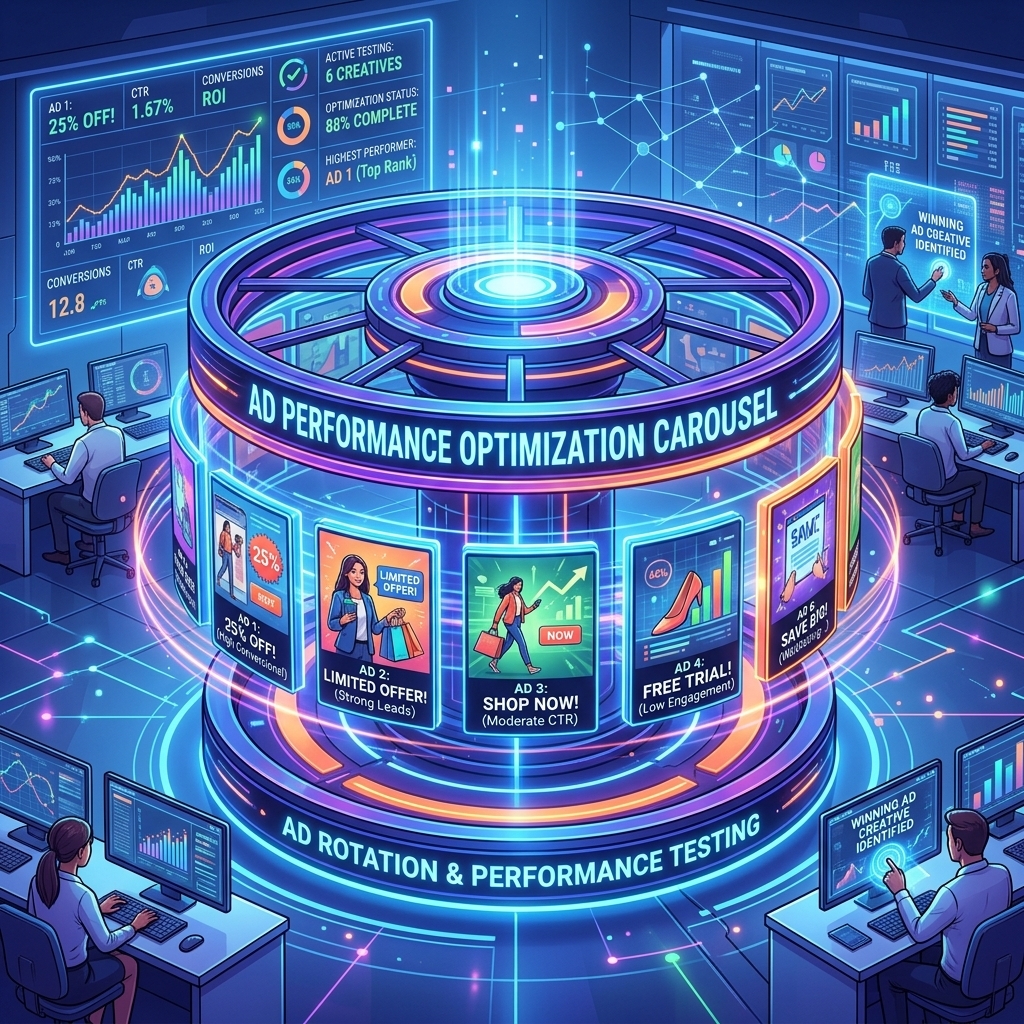
Optimizing ad rotation in Google Ads is a critical component of maximizing ad performance and ensuring continuous improvement within your campaign structure. Ad rotation settings determine how Google serves multiple ads within a single ad group, allowing advertisers to test different creatives and identify the most effective messages. Google offers two primary ad serving options: “Optimize” and “Do not optimize (rotate ads indefinitely).”
The “Optimize” setting prioritizes ads Google predicts will perform better based on signals like historical CTR and conversion rates. While this can seem beneficial, it often limits the exposure of newer or underperforming ads, hindering comprehensive A/B testing. For robust testing, I recommend “Do not optimize (rotate ads indefinitely)” or “Rotate evenly.” This setting ensures that all ads in an ad group receive a relatively equal number of impressions over time, providing sufficient data to make informed decisions. A client recently achieved a 12% increase in conversion rate after switching to “rotate evenly” for 30 days, allowing them to identify a winning ad creative they would have missed with “optimize.”
After a sufficient testing period (e.g., 2-4 weeks or 5,000+ impressions per ad), analyze the performance metrics (CTR, conversions, CPA) of each ad. Pause underperforming ads and introduce new variations, continuously refining your messaging. This systematic approach to Google Ads ad rotation is key to long-term success and directly contributes to a dynamic and high-performing Google Ads campaign structure. With a refined ad rotation strategy, the focus shifts to the ongoing maintenance and scaling of your well-structured campaigns.
Maintaining & Scaling Your Google Ads Structure
Maintaining and scaling your Google Ads structure is an ongoing process that ensures long-term campaign effectiveness and growth. A well-organized Google Ads account structure provides the foundation, but regular review and adaptation are essential to respond to market changes, new product offerings, and evolving user behavior. This involves periodic audits of keyword performance, ad copy relevance, and targeting settings.
Regularly review your search term reports to identify new keyword opportunities or negative keywords that can improve targeting efficiency. Our agency often conducts monthly structure audits for clients, typically finding 5-10% of ad spend can be reallocated for better performance by pruning underperforming keywords or expanding into new, relevant ad groups. As your business grows, scaling your Google Ads organization might involve expanding into new geographic regions, launching new product lines, or targeting different audience segments. Each expansion should follow the same principles of granular campaign and ad group structuring.
For businesses looking to scale rapidly or manage complex structures across multiple platforms, utilizing a robust foundation like a rent agency ad account can be highly beneficial. These accounts often come with higher spending limits and a clean history, facilitating immediate implementation of advanced Google Ads account structure strategies without the typical new account restrictions. AdShift provides verified Google Ads agency accounts that streamline this scaling process, letting you focus on optimization rather than initial setup hurdles. This proactive approach to maintenance and scaling ensures your Google Ads campaign structure remains a powerful asset, not a liability.

FAQ
What is the basic Google Ads account hierarchy?
The Google Ads account hierarchy consists of an optional Manager Account (MCC) at the top, individual Google Ads accounts, campaigns within those accounts, ad groups within campaigns, and finally, keywords and ads within ad groups. This layered structure allows for granular control over budgets, targeting, and messaging.
How many ad groups should be in a Google Ads campaign?
The number of ad groups per Google Ads campaign varies, but a best practice is to keep them tightly themed. I’ve seen campaigns perform optimally with anywhere from 5 to 20 ad groups, each focusing on a very specific set of keywords and corresponding ad copy. The goal is maximum relevance.
What is the purpose of ad rotation in Google Ads?
Ad rotation in Google Ads controls how frequently your ads serve relative to each other within an ad group. Its purpose is to facilitate A/B testing of different ad creatives to identify the highest-performing versions, ultimately improving CTR and conversion rates. “Rotate evenly” is often preferred for data collection.
Why is a well-structured Google Ads account important?
A well-structured Google Ads account is critical for several reasons: it improves ad relevance, which can lower CPCs and increase Quality Score; it simplifies management and optimization; it ensures budget efficiency by allocating spend to high-performing areas; and it provides clear reporting insights, driving better strategic decisions.
How can an agency ad account help with Google Ads structure?
An agency ad account, like those provided by AdShift, often comes pre-configured with higher spending limits and a clean history, allowing advertisers to implement complex Google Ads structures without initial restrictions. This bypasses typical new account limitations, enabling immediate scale and advanced structural testing. It provides a robust foundation from the start.
Conclusion
A meticulously designed Google Ads campaign structure is not merely an organizational task; it’s a strategic imperative for maximizing ROI and achieving sustainable growth. By understanding the hierarchy from the MCC down to granular ad groups, implementing strategic segmentation, aligning ad copy with keywords, and optimizing ad rotation, advertisers can dramatically improve campaign performance. This structured approach leads to higher Quality Scores, lower CPCs, and ultimately, more conversions.
Ready to implement a winning Google Ads campaign structure without the typical setup delays? Rent a verified Google Ads agency account from AdShift and start building your high-performance campaigns today.