Many advertisers struggle to effectively introduce their brand to new audiences, often over-relying on bottom-of-funnel tactics and missing out on significant growth. In fact, a recent industry study showed that businesses neglecting top-of-funnel demand generation could see up to a 30% higher customer acquisition cost over time. This article will explore how Google Ads demand gen campaigns can strategically address this by proactively engaging potential customers. We’ll cover everything from defining these campaigns and their key components to crafting high-performing creatives, optimizing for ROI, and leveraging powerful agency ad accounts, finally moving into troubleshooting common issues to ensure your success.
What are Google Ads Demand Gen Campaigns?
Google Ads demand gen campaigns generate demand by proactively reaching new, qualified audiences across Google’s extensive network, introducing them to your brand or offerings. These campaigns aim to introduce your brand, products, or services to users who haven’t explicitly searched for them yet, nurturing interest at the early stages of the buyer journey. Our campaigns show that well-executed demand gen can reduce future acquisition costs by up to 15% by pre-qualifying leads and shortening the sales cycle.
Demand generation on Google Ads primarily leverages visual-first formats across platforms like YouTube, Discovery, and Gmail. Unlike search campaigns that capture existing intent, demand gen creates new intent by placing compelling content in front of users based on their interests, behaviors, and demographics. This strategic shift from reactive to proactive advertising allows businesses to build brand equity and expand market share before competitors even enter the consideration phase.
Understanding the purpose of demand gen campaigns is crucial; next, we’ll dissect their core components that make this possible.

Key Components of Google Demand Generation
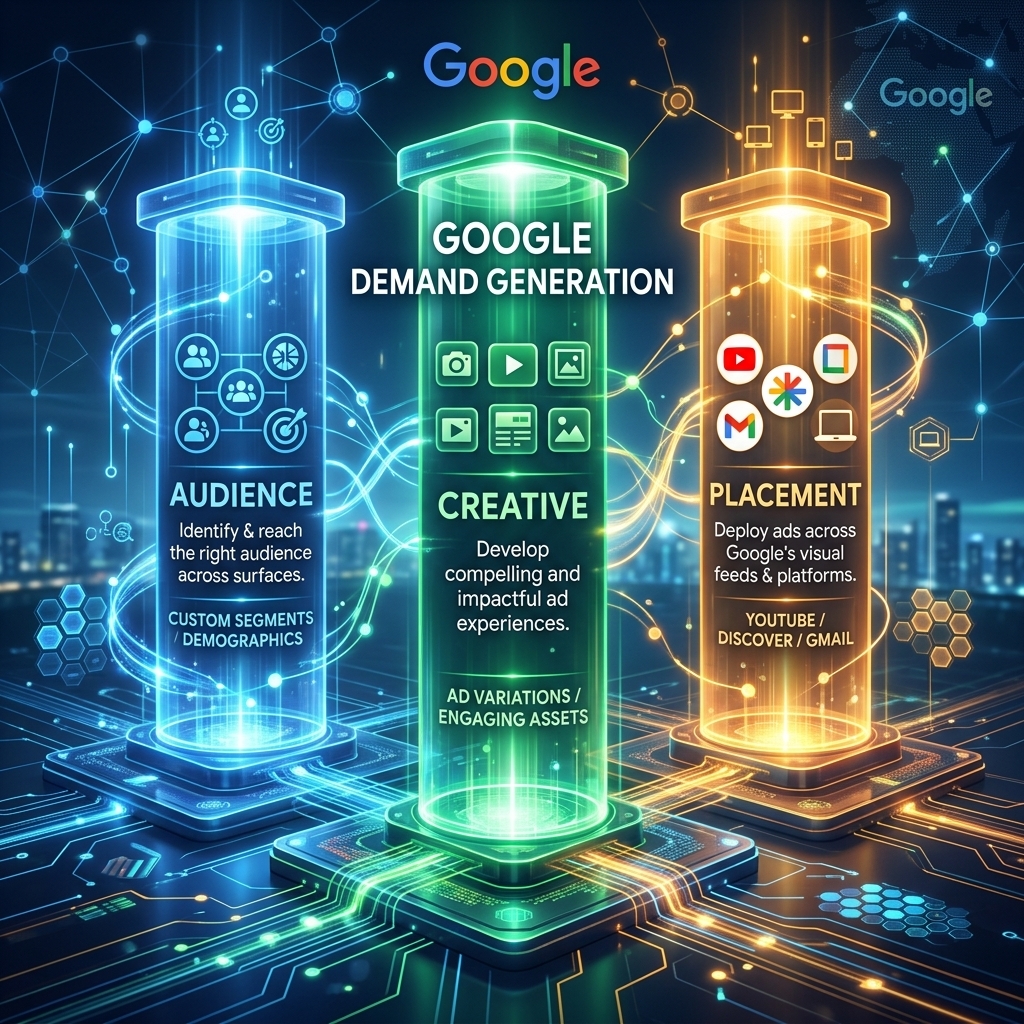
Google demand generation relies on three critical components: precise audience targeting, compelling creative assets, and strategic placement across Google’s network. Each component plays a vital role in building effective campaigns that resonate with potential customers. Neglecting any one of these can significantly impair campaign performance and ROI.
Audience targeting is paramount for reaching the right people who are most likely to develop interest in your brand. Options include Custom Intent audiences built from competitor URLs or relevant content topics, Similar Audiences based on your existing customer base, Customer Match lists for retargeting or lookalikes, and detailed demographic/interest targeting. I’ve seen custom intent audiences built from competitor URLs deliver 1.8x higher CTR than broad interest targeting in Discovery campaigns, proving the power of specificity.
Creative assets are the visual and textual elements that capture attention and convey your message. These include high-quality images, engaging videos (especially for YouTube), carousel ads, and concise, benefit-driven ad copy. The visual nature of demand gen platforms means creatives must be immediately impactful.
Strategic placements refer to where your ads appear across Google’s ecosystem. This includes YouTube (in-stream, in-feed, Shorts), the Google Discovery feed (found on the Google app and mobile homepage), and Gmail tabs (Promotions and Social). These are environments where users are typically consuming content casually, making them receptive to discovery.
With a clear understanding of these foundational components, let’s dive into crafting the creative assets that truly capture attention.
Crafting High-Performing Demand Gen Creatives
Crafting high-performing demand gen creatives for Google Ads involves understanding platform-specific requirements and user behavior to maximize engagement. Effective creatives are not just visually appealing; they are strategically designed to stop the scroll, tell a story, and prompt further interaction. This focus on engagement is what drives initial interest and moves users down the funnel.
For video ads, especially on YouTube and Shorts, the first 3-5 seconds are critical. Your video needs a strong hook that immediately grabs attention, presents a problem, or showcases a compelling solution. A client recently achieved a 2.5% higher view-through rate on YouTube Shorts ads using a dynamic, fast-paced intro compared to a slower, brand-focused opening. Keep videos concise, ideally under 30 seconds for demand gen, and ensure they are optimized for mobile viewing.
Image ads must be high-quality, visually striking, and include a clear call-to-action (CTA). Brand consistency in imagery and messaging is crucial across all assets. A/B testing different image styles, color palettes, and CTA placements can reveal significant performance differences; I’ve observed creative variations leading to a 10-15% swing in click-through rates.
Carousel ads offer an opportunity to tell a more detailed story or showcase multiple products or features within a single ad unit. Each card should contribute to a narrative or highlight a distinct benefit. Ad copy should be benefit-driven, concise, and directly address the pain points or aspirations of your target audience. For a deeper dive into general Google Ads best practices, including ad copy and creative principles, refer to our comprehensive Google Ads complete guide.
Once your compelling creatives are ready, the next step is to optimize your campaigns to ensure they deliver measurable returns.

Optimizing Your Google Demand Gen Campaigns for ROI
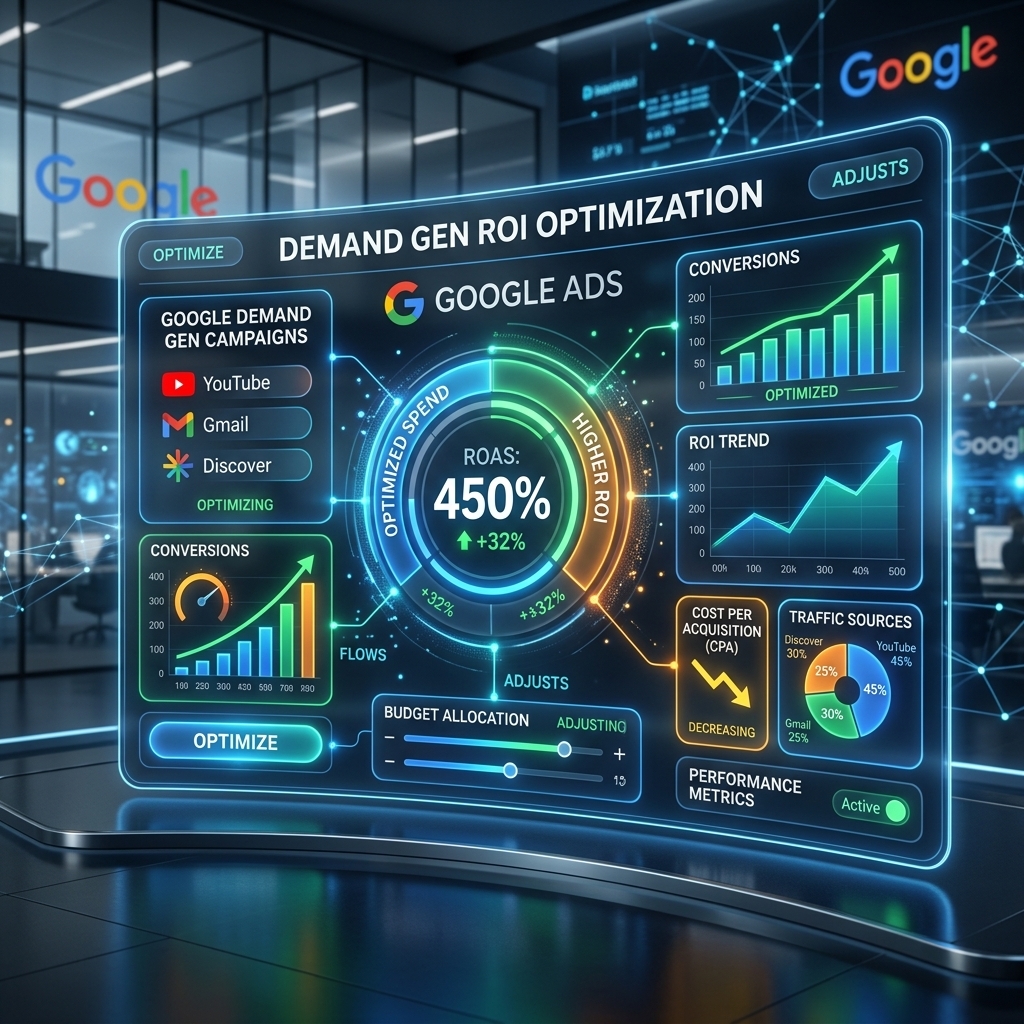
Optimizing Google demand gen campaigns for ROI requires a strategic approach to bidding, budget allocation, and continuous performance monitoring. Without a clear optimization framework, even the most compelling creatives and precise targeting can fall short of their potential. The goal is to maximize the impact of every advertising dollar, moving users from awareness to consideration efficiently.
Bidding strategy is a cornerstone of demand gen optimization. For initial campaign setup, “Maximize Conversions” is often a good starting point, especially if you have sufficient conversion data. As data accumulates, you might transition to “Target CPA” to control costs per action or “Target ROAS” if you’re tracking revenue and have clear value rules for conversions. I’ve found that setting realistic CPA targets based on historical data or industry benchmarks can improve conversion efficiency by up to 20%.
Budget allocation should be dynamic, shifting resources towards the best-performing audience segments, creative assets, and placements. Start with a conservative budget and scale up as you identify winning combinations and meet your performance targets. Regular budget reviews (weekly for active campaigns) are essential to prevent overspending on underperforming areas.
Measurement extends beyond simple clicks and impressions. For demand gen, it’s crucial to track relevant micro-conversions such as video views, landing page visits, lead form initiations, and time spent on site, alongside your primary macro conversions. Our campaigns consistently track lead quality beyond just conversions, finding that optimizing for a ‘qualified lead’ custom conversion can improve downstream sales by 10% by focusing on higher-intent interactions. This holistic view provides a clearer picture of how demand generation contributes to the overall sales funnel.
Achieving optimal campaign performance often requires robust account infrastructure, which is where specialized agency ad accounts can provide a significant advantage.
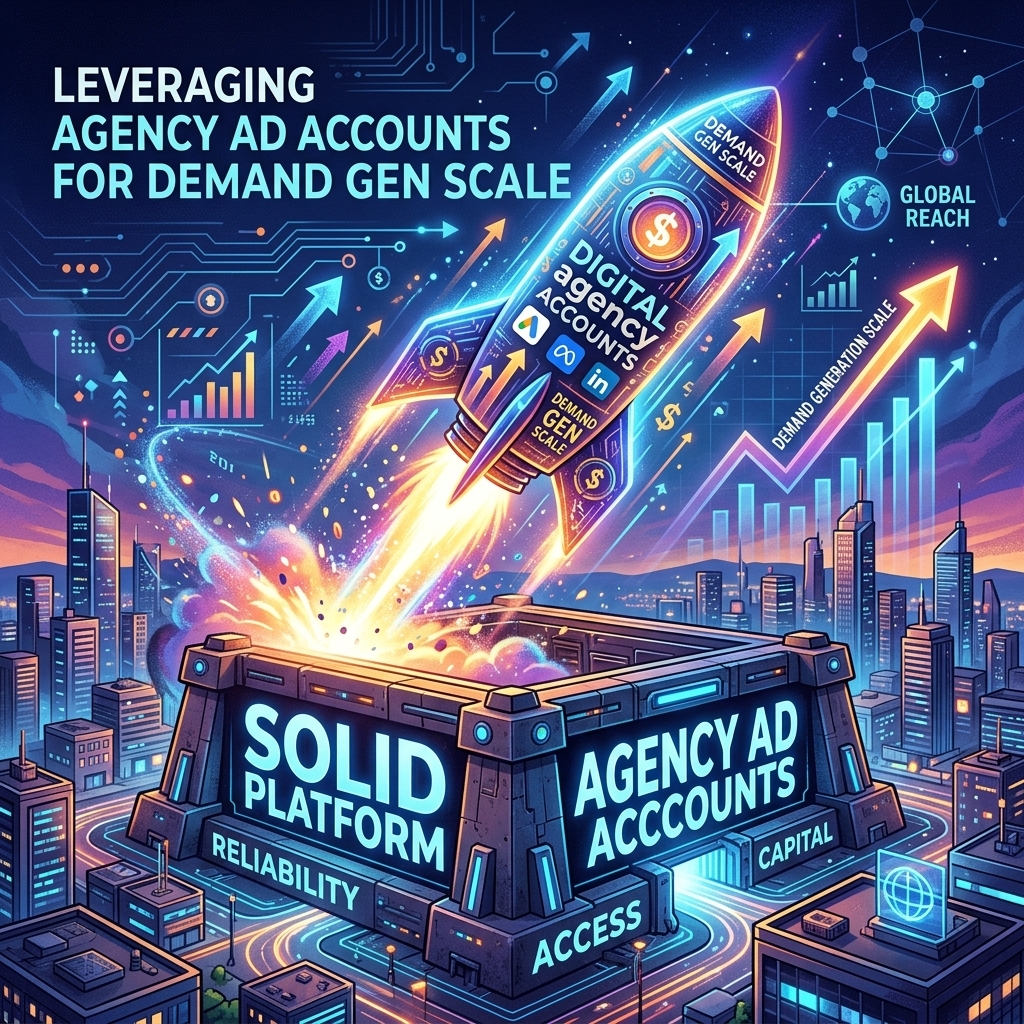
Leveraging Agency Ad Accounts for Demand Gen Scale
Leveraging agency ad accounts for demand gen scale on Google Ads offers unparalleled advantages in stability, spending limits, and feature access, directly impacting your ability to launch and grow campaigns efficiently. Many advertisers, especially those new to Google Ads, face immediate hurdles that can stifle their demand generation efforts. Agency ad accounts provide a solution to these common frustrations.
Stability is a critical benefit. Agency accounts are typically older, have a higher trust score with Google, and are less prone to arbitrary suspensions or review delays compared to newly created personal accounts. This stability means your campaigns can run uninterrupted, gathering crucial data and building momentum. I’ve seen new advertisers hit daily spending caps almost immediately, while an agency ad account from AdShift allows for immediate scaling to $500+/day without the typical 2-week ramp-up period.
Spending limits are often a major bottleneck for aggressive demand generation. New Google Ads accounts frequently have low daily spending caps that prevent advertisers from reaching a broad audience or gathering sufficient data quickly. Agency ad accounts bypass these initial restrictions, enabling you to deploy larger budgets from day one. This is crucial for demand gen, which often requires significant initial investment to gather data and optimize effectively across diverse audiences and placements.
Agency ad accounts often come with access to beta features, advanced tools, and dedicated support from Google that individual advertisers may not receive. This access can provide a competitive edge, allowing you to test new ad formats or targeting options before they become widely available. Advertisers using a verified agency ad account from AdShift bypass the 2-week verification delay and start running campaigns immediately, critical for time-sensitive demand generation initiatives. If you’re looking to quickly expand your reach without these limitations, consider renting a verified agency ad account specifically designed for high-volume advertising.
Even with the best accounts, campaigns can face hurdles, so understanding how to troubleshoot common issues is essential for sustained success.
Troubleshooting Common Demand Gen Campaign Issues
Troubleshooting common demand gen campaign issues often involves diagnosing underperformance in areas like audience reach, creative fatigue, or bidding strategy. Proactive monitoring and a systematic approach to problem-solving are vital for maintaining campaign health and maximizing ROI. Ignoring these signs can lead to wasted ad spend and missed opportunities for growth.
If your campaigns are experiencing low reach or impressions, start by checking your audience size. Is it too narrow? Ensure your bidding strategy is competitive enough for your target audience and placements, and that your budget isn’t too restrictive. Sometimes, simply increasing bids or expanding a slightly constrained audience can unlock significant reach.
High CPC (Cost Per Click) or CPA (Cost Per Acquisition) can indicate several underlying problems. Review your creative relevance and ensure it strongly aligns with your target audience’s interests. Evaluate your landing page experience; a poor landing page can drive up costs. Consider adding audience exclusions to filter out irrelevant traffic. A client recently reduced their Discovery CPA by 20% by segmenting their audience further and tailoring specific ad copy for each, which significantly improved ad relevance and quality score.
Creative fatigue is a common issue in demand generation, where the same ads are shown too frequently to the same audience, leading to diminishing returns. Regularly refresh ad creatives, ideally every 3-4 weeks for high-volume campaigns, to keep your messaging fresh and engaging. Monitor frequency metrics within Google Ads to identify when your audience is becoming overexposed.
Finally, conversion tracking issues can severely skew your optimization efforts. Verify your Google Tag Manager (GTM) setup, ensure all conversion actions are correctly configured, and check your conversion window settings. Inaccurate tracking leads to misinformed decisions, hindering your campaign’s ability to learn and optimize effectively.

Frequently Asked Questions
What is the main difference between demand gen and lead gen campaigns?
Demand generation campaigns focus on creating awareness and interest at the top of the funnel, introducing your brand to new audiences who may not be actively searching. Lead generation campaigns, conversely, target users closer to conversion, aiming to capture contact information from those already interested in your product or service. Demand gen nurtures interest, while lead gen captures existing intent.
Which Google Ads platforms are best for demand generation?
Google Discovery Ads, YouTube (especially in-stream, in-feed, and Shorts), and Gmail are the primary platforms within Google Ads for demand generation. These placements allow advertisers to reach users proactively as they consume content, browse feeds, or check emails, rather than waiting for them to search for specific keywords.
How often should I refresh creatives in a demand gen campaign?
Creative fatigue is a significant factor in demand generation campaigns. For high-volume campaigns, I’ve seen that refreshing ad creatives every 3-4 weeks is optimal to maintain engagement and prevent diminishing returns. Monitoring frequency metrics and CTR can help identify when creative performance starts to decline, signaling a need for new assets.
Can I use demand gen campaigns for B2B marketing?
Yes, demand gen campaigns are highly effective for B2B marketing, particularly for building brand awareness and educating potential clients about complex solutions. Utilizing audience targeting options like Custom Intent (based on competitor websites or relevant content), Customer Match, and detailed demographic targeting allows B2B marketers to reach key decision-makers and influencers at scale.
Conclusion
Google Ads demand gen campaigns are an indispensable tool for businesses looking to expand their reach, build brand awareness, and proactively engage new audiences. By strategically leveraging precise audience targeting, compelling creatives, and optimal placements across Google’s network, you can effectively nurture interest at the top of the funnel and drive future conversions. Overcoming common challenges and continuously optimizing your campaigns ensures sustained success.
Ready to scale your demand generation efforts and bypass initial spending limits? Rent a verified Google Ads agency account from AdShift and launch your high-impact campaigns immediately.