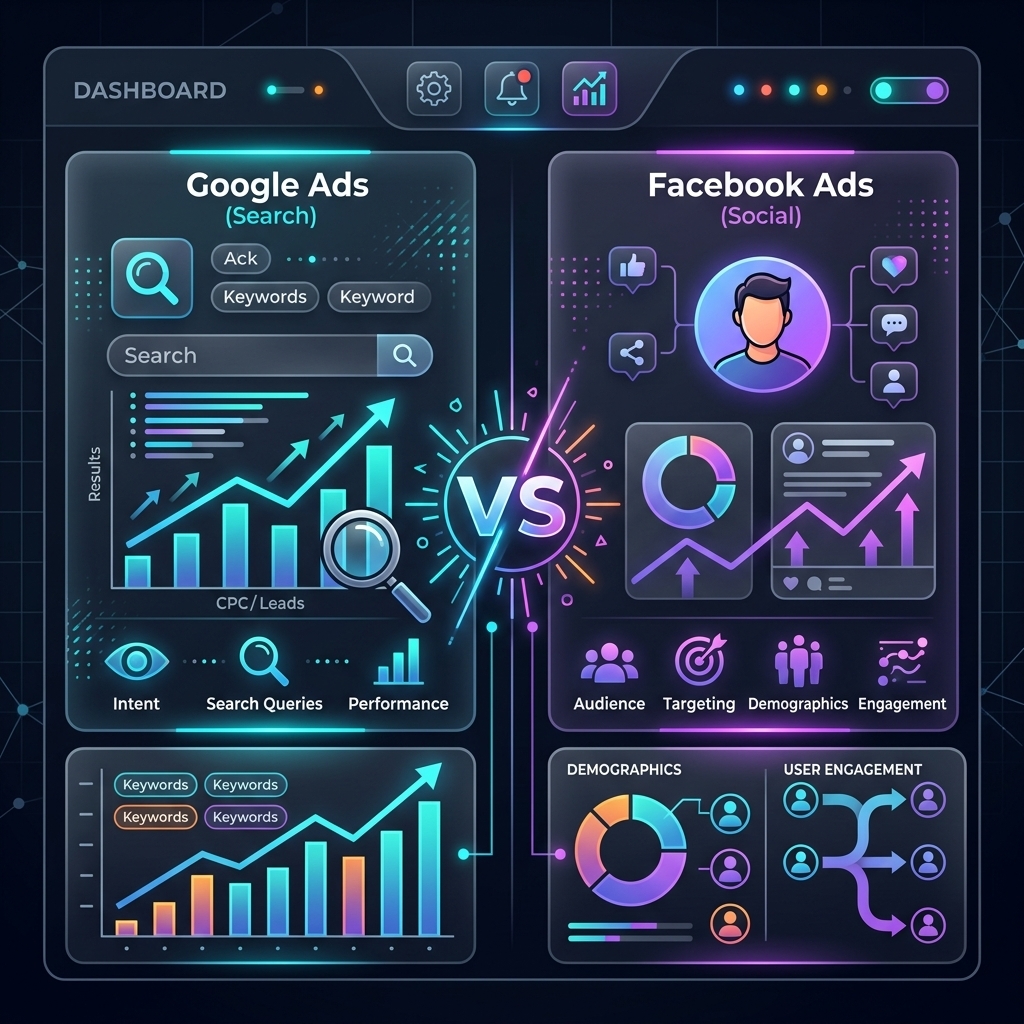
Google Ads captures existing demand at $5.26 average CPC. Facebook Ads creates new demand at $1.72 CPC. The right choice depends on whether your customers are actively searching or need to discover your product first.
I manage campaigns across both platforms through agency ad account setups, and the ROI equation shifts based on your business model, sales cycle, and average order value. Here is the full breakdown.
Google Ads vs Facebook Ads at a Glance
| Metric | Google Ads | Facebook Ads |
|---|---|---|
| Average CPC | $5.26 | $1.72 |
| Targeting Model | Search intent (active demand) | Interest/behavior (interruption) |
| Traffic Temperature | Hot (user is searching) | Cold (user is browsing) |
| Conversion Path | Shorter (higher intent) | Longer (needs nurturing) |
| Audience Reach | 8.5B+ daily searches | 3B+ monthly active users |
| Ad Formats | Search, Display, Shopping, YouTube | Image, Video, Carousel, Stories, Reels |
| Best For | Service businesses, local, high-intent | Brand awareness, ecommerce, visual products |
| Weaknesses | Higher cost, competitive bidding | Ad fatigue, iOS privacy impact |
How Google Ads Works
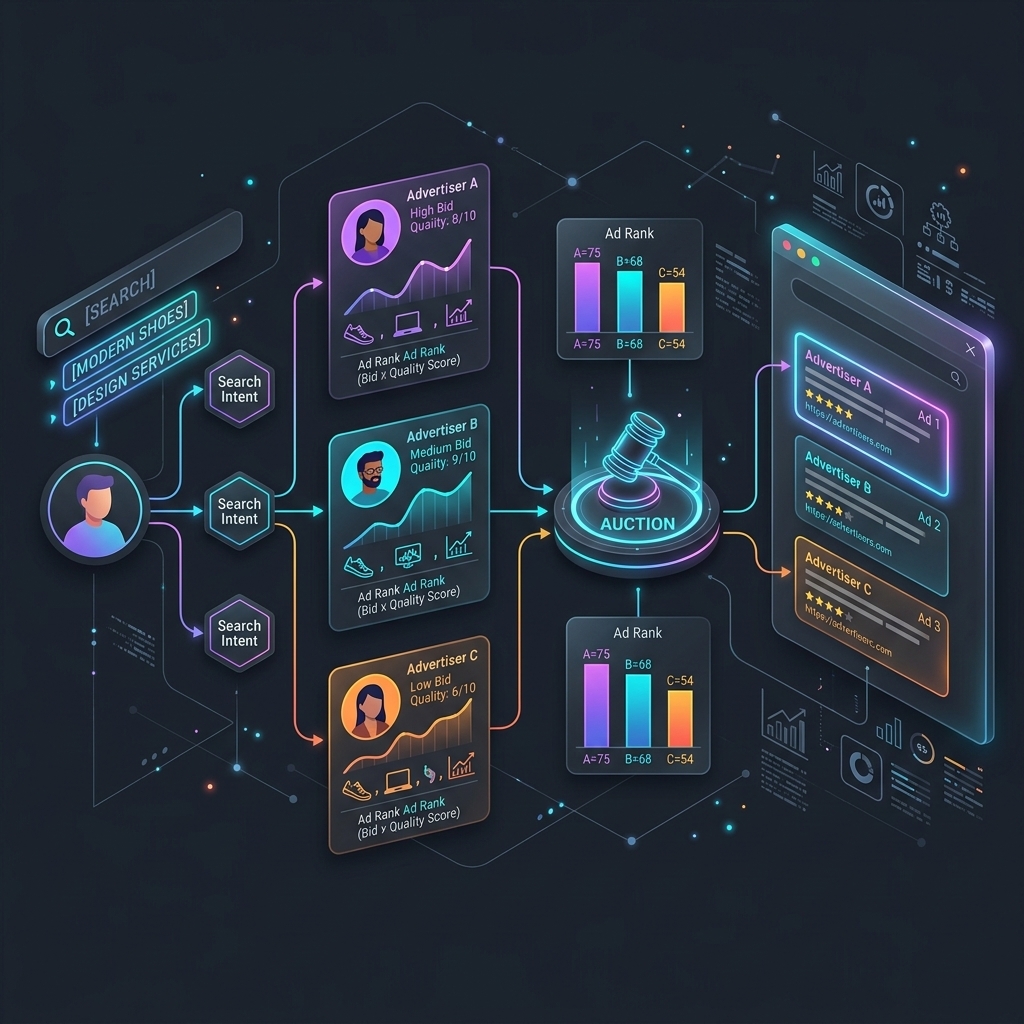
Google Ads operates on an intent-based auction model. Someone types “plumber near me” or “best CRM software” — they already want something. Your ad appears at the exact moment of intent.
Core ad formats:
- Search Ads — Text ads triggered by keyword searches. Highest intent, highest CPC.
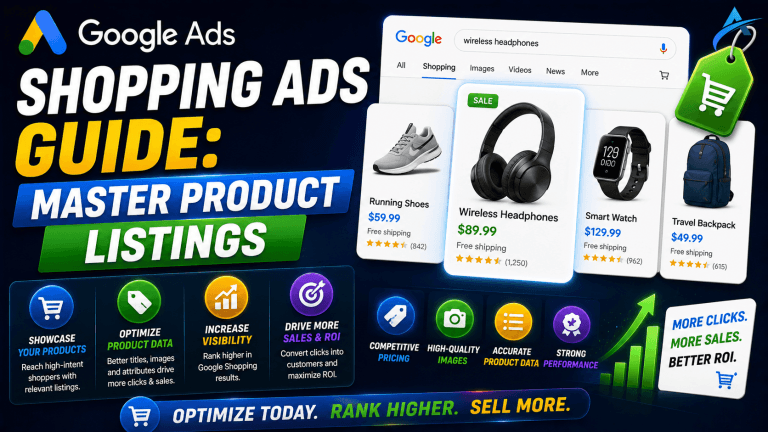
- Shopping Ads — Product listings with images and prices. Dominant for ecommerce.
- Display Ads — Banner ads across 2M+ websites in Google’s Display Network.
- YouTube Ads — Video ads before, during, or after YouTube content.
- Performance Max — AI-driven campaigns across all Google surfaces simultaneously.
The auction considers your bid, Quality Score (ad relevance + landing page experience + expected CTR), and ad extensions. A higher Quality Score reduces your actual CPC — meaning better ads cost less per click.
How Facebook Ads Works
Facebook Ads uses an interruption model. Users are not searching for your product. They are scrolling through their feed, watching Stories, or browsing Reels. Your ad breaks into that experience.
The targeting engine is what makes this work. Facebook builds audience profiles from billions of data points: demographics, interests, behaviors, purchase history, and engagement patterns.
Core placements:
- Feed — Standard in-feed ads (highest volume).
- Stories — Full-screen vertical ads between user Stories.
- Reels — Short-form video placements.
- Messenger — Direct-to-inbox ad placements.
- Audience Network — Facebook’s external ad network.
Lookalike audiences remain Facebook’s strongest prospecting tool. Upload your customer list, and Facebook finds users with similar characteristics. This creates demand where none existed before.

Cost Comparison
| Cost Metric | Google Ads | Facebook Ads |
|---|---|---|
| Average CPC | $5.26 | $1.72 |
| Cost Per Lead (avg) | $40-$80 | $15-$50 |
| Monthly Budget (SMB) | $1,000-$10,000 | $500-$5,000 |
| Minimum Daily Budget | $1 | $1 |
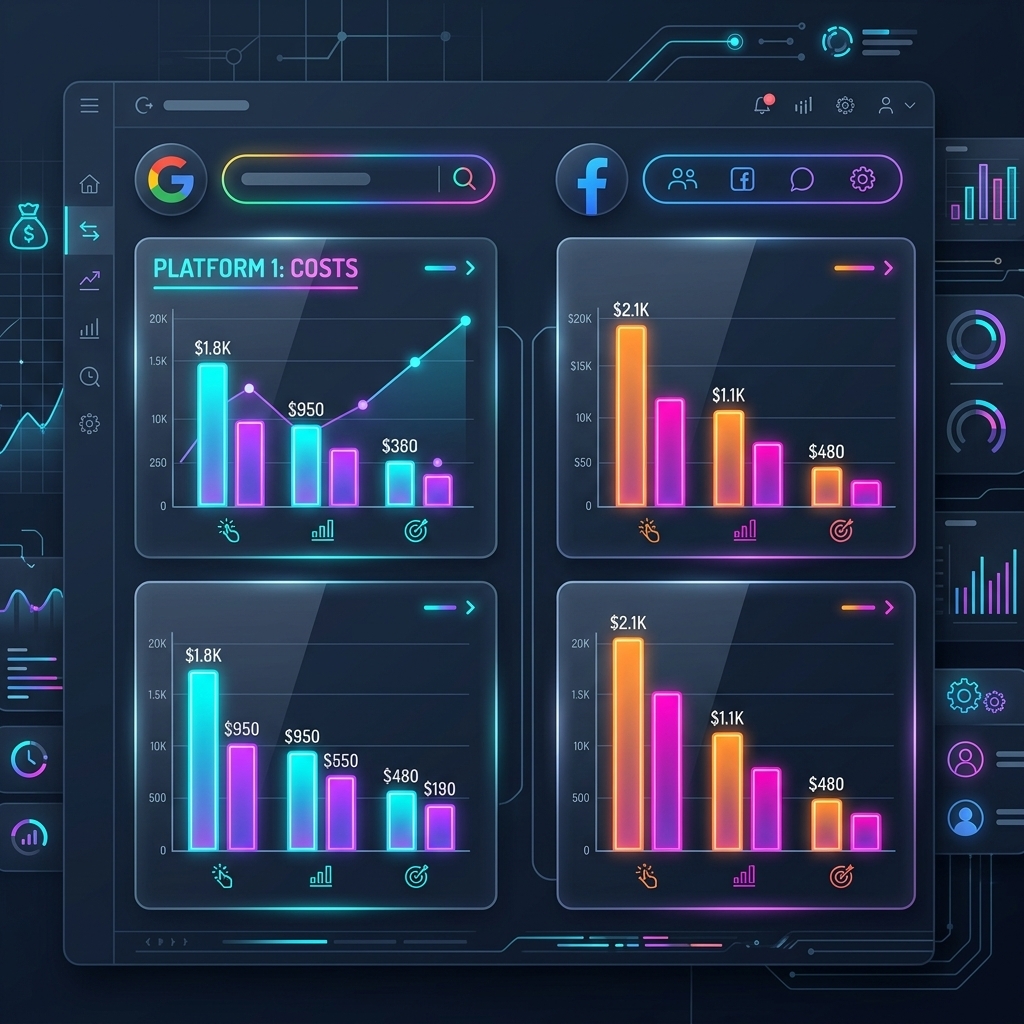
Google Ads costs more per click because the traffic is warmer. A user searching “buy running shoes” converts at a higher rate than someone who sees a shoe ad while browsing their feed.
Running campaigns through an agency ad account reduces wasted spend. Higher trust scores from agency accounts lead to better ad delivery and lower CPMs on Facebook, plus improved Quality Scores on Google.
The real cost comparison is cost per acquisition, not cost per click. Google’s higher CPC often produces lower CPA for service businesses. Facebook’s lower CPC delivers cheaper leads for ecommerce and direct-to-consumer brands.
Targeting Capabilities
Google Ads targeting is keyword-driven. You target what people search for — their explicit intent. Audience layering adds demographics and in-market segments on top of keyword targeting.
- Keyword match types (broad, phrase, exact)
- In-market audiences (people actively researching a purchase)
- Custom intent audiences
- Geographic and device targeting
- Remarketing lists for search ads (RLSA)
Facebook Ads targeting is profile-driven. You target who people are — their demographics, interests, and behaviors.
- Detailed demographics (age, income, education, job title)
- Interest-based targeting (hobbies, brands, activities)
- Behavioral targeting (purchase behavior, device usage)
- Lookalike audiences (1-10% similarity to source audience)
- Custom audiences (website visitors, email lists, app users)
The fundamental difference: Google targets intent. Facebook targets identity. Both are powerful, but they serve different stages of the buying journey.

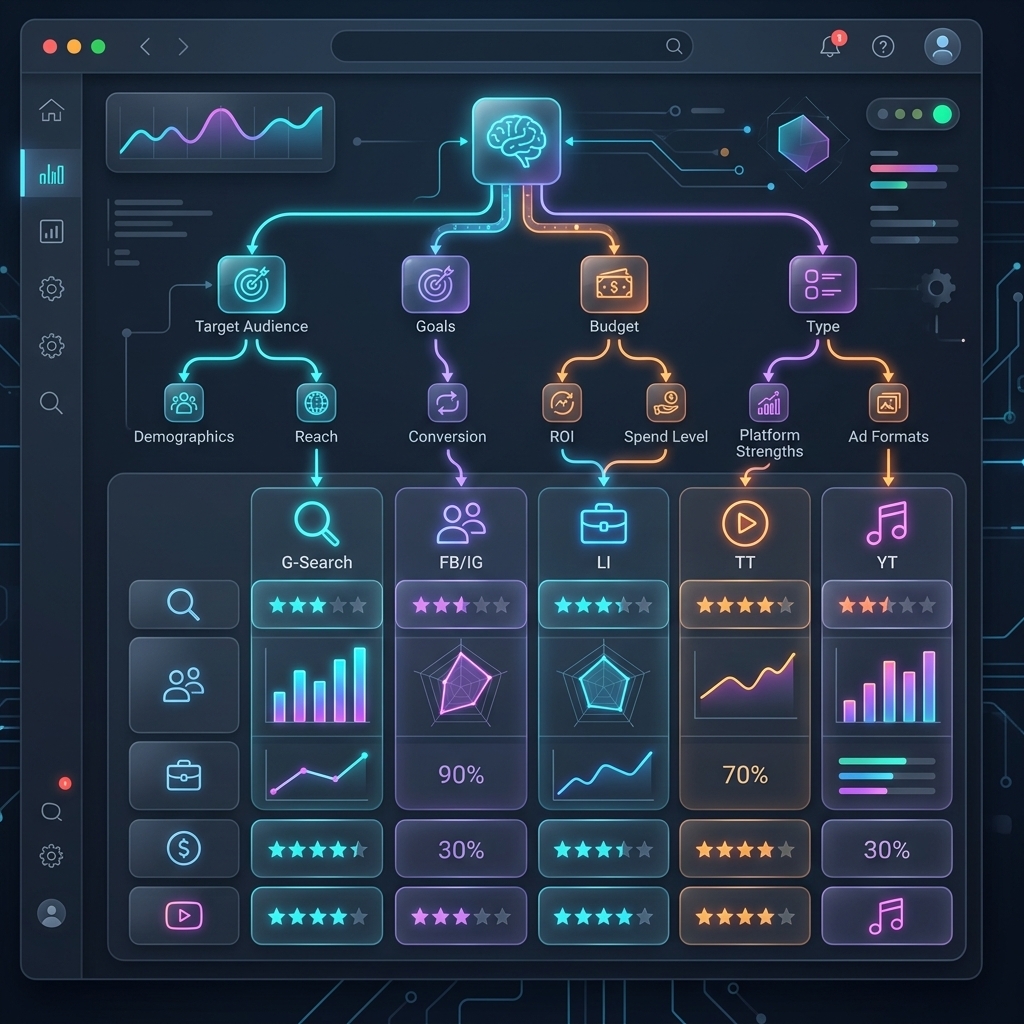
Which Platform to Choose
Ecommerce brands: Start with Facebook Ads for prospecting and brand awareness. Use Google Shopping for bottom-funnel purchase captures. Facebook’s visual formats showcase products. Google Shopping converts when users compare prices.
Local service businesses: Google Ads first. People search “dentist near me” or “emergency plumber.” Search intent converts immediately. Add Facebook for local awareness campaigns once Google is profitable.
SaaS companies: Google Ads for high-intent keywords like “project management software” or “CRM for small business.” Facebook for retargeting free trial signups and promoting content that nurtures leads.
Service-based businesses (agencies, consultants): Google Ads dominates. Your prospects are searching for solutions. Facebook supports top-funnel content distribution but rarely drives direct conversions for high-ticket services.
How to Use Both Together
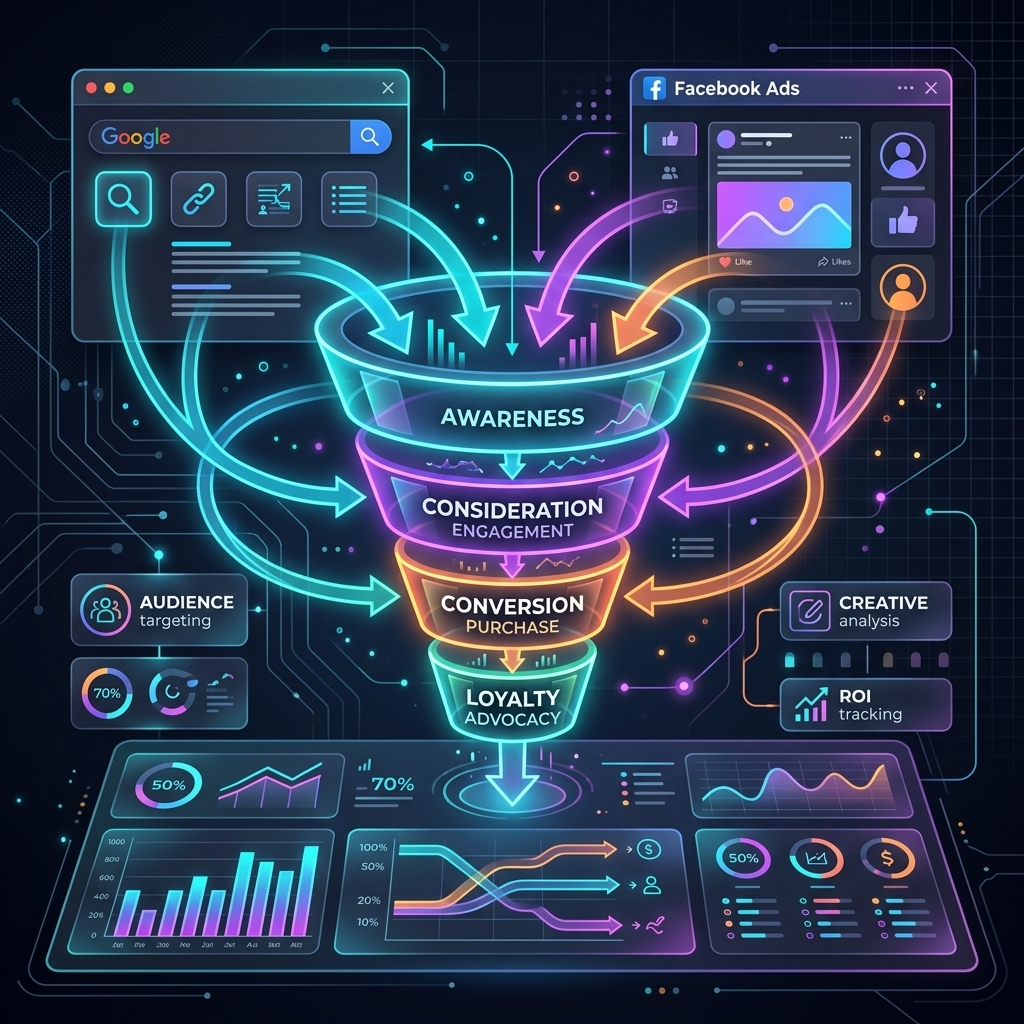
The strongest campaigns use Google and Facebook together in a full-funnel strategy.
Facebook creates demand. Run prospecting campaigns to cold audiences using lookalike targeting. Drive traffic to content, lead magnets, or product pages.
Google captures demand. When those same users later search for your product category, your Google Ads appear at the exact moment of intent.
Retargeting closes the loop. Use Facebook Custom Audiences to retarget Google Ads visitors who did not convert. Use Google remarketing to re-engage Facebook traffic.
This full-funnel approach requires stable ad accounts on both platforms. An agency ad account from ADShift provides the reliability needed for persistent audience building and cross-platform retargeting without account disruptions.
Budget allocation framework:
- New brand, no search demand: 70% Facebook / 30% Google
- Established brand with search volume: 50% Google / 50% Facebook
- Service business with high-intent keywords: 70% Google / 30% Facebook
FAQ
Is Google Ads better than Facebook Ads for small businesses?
It depends on the business type. Google Ads works best for service businesses where customers search for solutions. Facebook Ads works best for product businesses that need visual storytelling. Most small businesses see the best results using both platforms together.
Can I run Google Ads and Facebook Ads simultaneously?
Yes. Running both platforms simultaneously is the recommended strategy. Use Facebook for awareness and prospecting. Use Google for capturing search demand. Cross-platform retargeting amplifies results from both channels.
Which platform has better ROI?
Google Ads typically delivers higher ROI for bottom-funnel conversions due to search intent. Facebook Ads delivers better ROI for top-funnel awareness and prospecting at lower CPCs. Combined ROI exceeds either platform alone.
How much should I spend on Google Ads vs Facebook Ads?
Start with $1,000-$3,000/month per platform for meaningful data. Allocate based on where your customers are in the buying journey. Test for 60-90 days before shifting budget between platforms.
No matter which platform you choose, a verified agency ad account from ADShift ensures stable performance, higher spend limits, and priority support on both Google and Facebook. Get started with ADShift.