Google Ads generates traffic the same day you launch a campaign. SEO takes 3-6 months to produce results but costs nothing per click once you rank. The choice is not binary — the smartest advertisers use PPC data to accelerate their SEO strategy.
Google Ads vs SEO Comparison
| Metric | Google Ads (PPC) | SEO (Organic) |
|---|---|---|
| Time to Results | Same day | 3-6 months minimum |
| Cost Structure | Pay per click ($4.22-$5.26 avg CPC) | Upfront investment (compounds over time) |
| Traffic When Stopped | Stops immediately | Continues (authority persists) |
| Conversion Rate | Lower on average | Higher on average |
| Credibility | Labeled “Sponsored” | Perceived as more trustworthy |
| SERP Position | Top of page (paid slots) | Below paid ads (organic slots) |
| Scalability | Scale with budget | Scale with content + authority |
| Data Speed | Immediate A/B test results | Slower iteration cycles |
| Long-Term ROI | Linear (pay for each click) | Compounding (cost per visit decreases over time) |

How Google Ads Generates Traffic
Google Ads places your listing at the top of search results through a real-time auction. You bid on keywords, Google evaluates your bid against your Quality Score, and the winning ads appear above organic results.
The process is immediate. Set up a campaign in the morning, start receiving clicks by afternoon. This speed makes Google Ads the fastest path to qualified traffic.
Quality Score determines your actual cost. Google scores your ad relevance, landing page experience, and expected click-through rate on a 1-10 scale. A Quality Score of 8+ reduces your CPC below your maximum bid. A score of 4 or below inflates it.
Running campaigns through an agency ad account gives you a head start on account trust. New personal accounts face spending limits, learning phases, and higher scrutiny. Agency accounts carry established trust signals that translate to faster ramp-up and more stable delivery.
Ad formats available:
- Search ads (text-based, keyword-triggered)
- Shopping ads (product listings with images and prices)
- Display ads (banner ads across partner websites)
- YouTube ads (video pre-roll, mid-roll, discovery)
- Performance Max (AI-optimized across all Google surfaces)

How SEO Generates Traffic
SEO earns organic rankings by matching your content to what Google considers the best answer for a search query. No per-click cost. No auction. Your page appears in organic results based on relevance, authority, and user experience signals.
The timeline is the trade-off. A new page targeting a competitive keyword needs 3-6 months to climb into the top 10. Some keywords take 12+ months. This is not guesswork — it is how Google’s indexing and ranking systems operate.
What SEO requires:
- Technical foundation (fast site, mobile-friendly, clean crawl structure)
- Content that matches search intent with depth and accuracy
- Backlinks from relevant, authoritative websites
- Consistent publishing and content updates
- User experience signals (low bounce rate, high dwell time)
The compounding effect. Once a page ranks, it generates traffic month after month without additional cost. A blog post that ranks #3 for a keyword with 5,000 monthly searches delivers roughly 500-750 visits per month — indefinitely. At $5.26 CPC, that same traffic through Google Ads would cost $2,630-$3,945 per month.

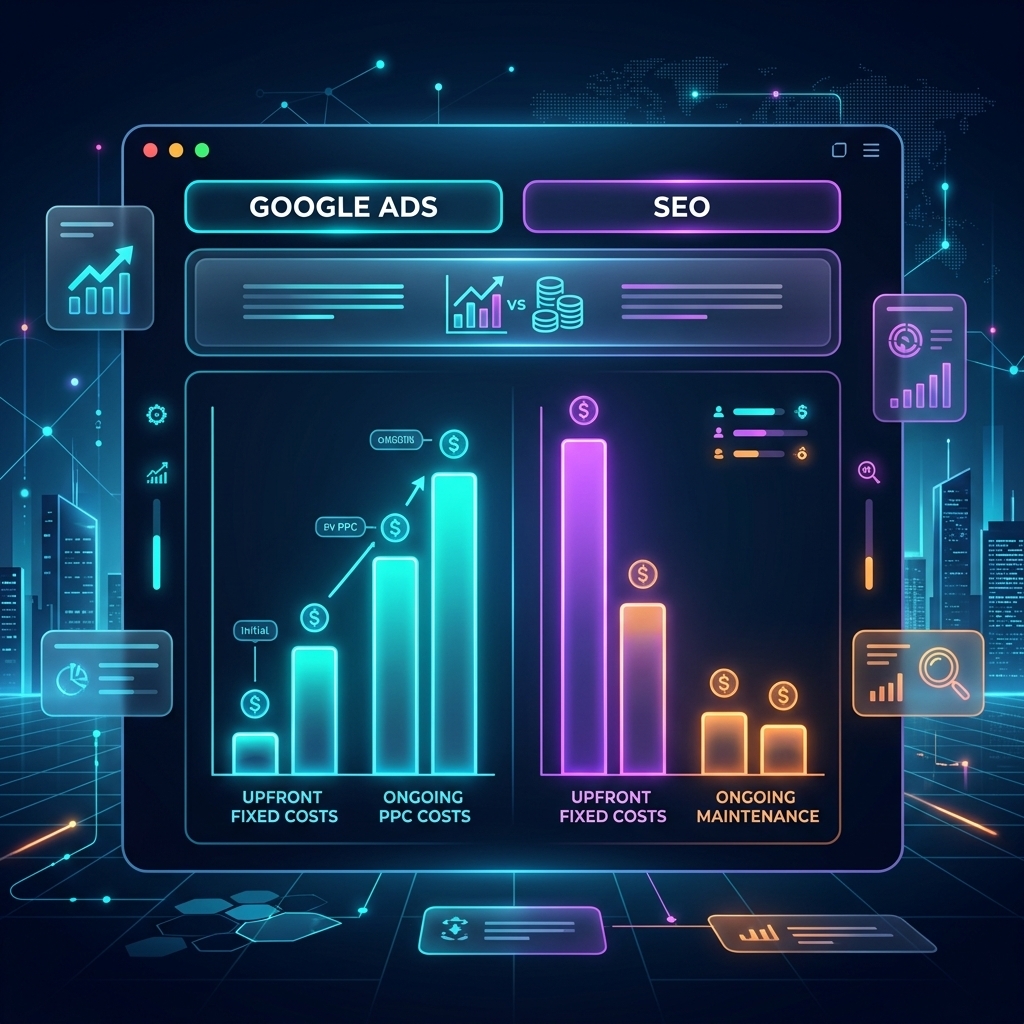
Cost Comparison
| Cost Factor | Google Ads | SEO |
|---|---|---|
| Average CPC | $4.22-$5.26 | $0 (organic clicks are free) |
| Monthly Spend (SMB) | $1,000-$10,000 in ad spend | $500-$5,000 in agency/content fees |
| Cost Per Lead (avg) | $40-$80 | $15-$45 (after ramp-up period) |
| 12-Month Total Cost | $12,000-$120,000 | $6,000-$60,000 |
| 12-Month Traffic | Stops when spend stops | Continues and grows |
Google Ads costs are linear. Spend $5,000 this month, get X clicks. Spend $5,000 next month, get roughly X clicks again. Stop spending, traffic drops to zero within hours.
SEO costs are front-loaded. Invest $3,000/month in content and link building for 6 months ($18,000 total). By month 7, organic traffic starts compounding. By month 12, your cost per visit drops below Google Ads — and keeps dropping as content accumulates.
Google itself states: “PPC is not a replacement for SEO.” The two channels serve different functions in a growth strategy.
Which Converts Better
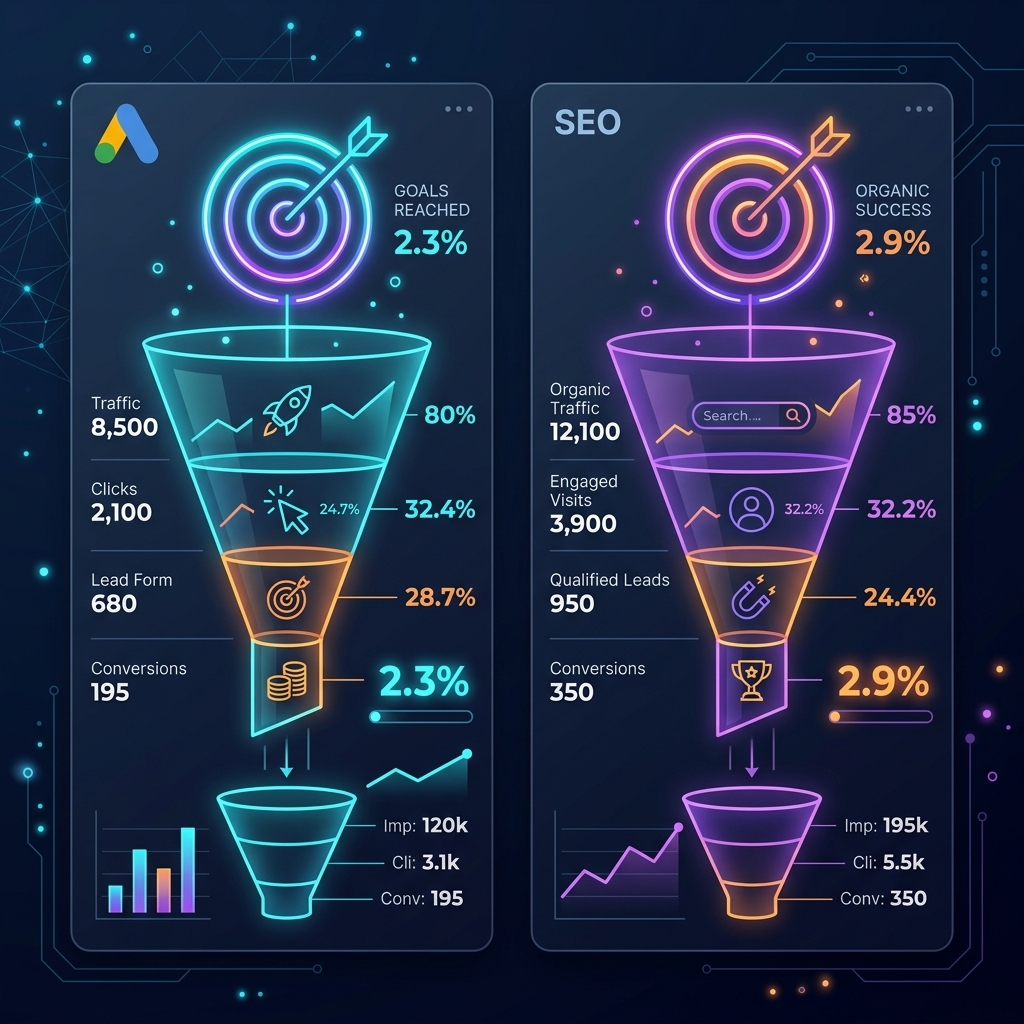
SEO traffic converts at a higher rate on average. Users trust organic results more than sponsored listings. They perceive organic rankings as earned credibility rather than paid placement.
Google Ads converts faster. A user clicking a search ad for “buy standing desk” has purchase intent and lands on a targeted product page. The conversion path is shorter even if the rate is slightly lower.
The nuance: conversion rate depends on landing page quality, not just traffic source. A poorly optimized landing page wastes both paid and organic traffic. A strong landing page converts well regardless of whether the click came from an ad or an organic listing.
For advertisers running paid search through an agency ad account, the stability of ad delivery directly impacts conversion rates. Account disruptions reset learning algorithms and degrade performance. Consistent delivery through a verified account maintains the optimization data Google needs to improve conversions over time.
When to Choose Google Ads Over SEO
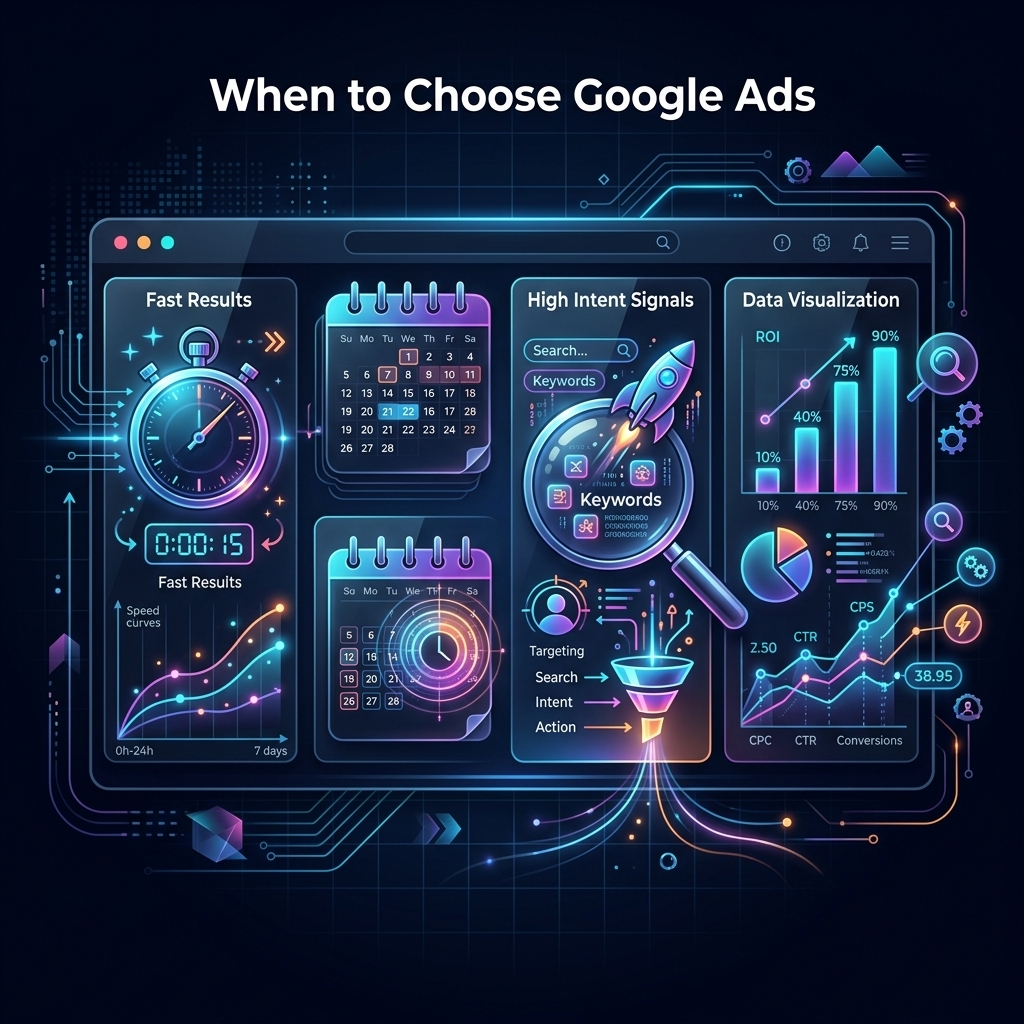
You need leads this week. A new business launching a service cannot wait 6 months for SEO. Google Ads delivers traffic on day one.
You are testing a new market. Before investing in SEO content, run Google Ads to validate keyword demand and conversion rates. PPC data tells you which keywords convert before you spend months building organic content around them.
You have a time-sensitive offer. Seasonal promotions, event registrations, and limited-time deals need immediate visibility. SEO cannot deliver traffic on a deadline.
The keyword landscape is extremely competitive. Some keywords (insurance, legal, finance) have such entrenched organic competition that ranking organically takes 12-24 months. Google Ads puts you on page 1 immediately while SEO builds.
When to Choose SEO Over Google Ads
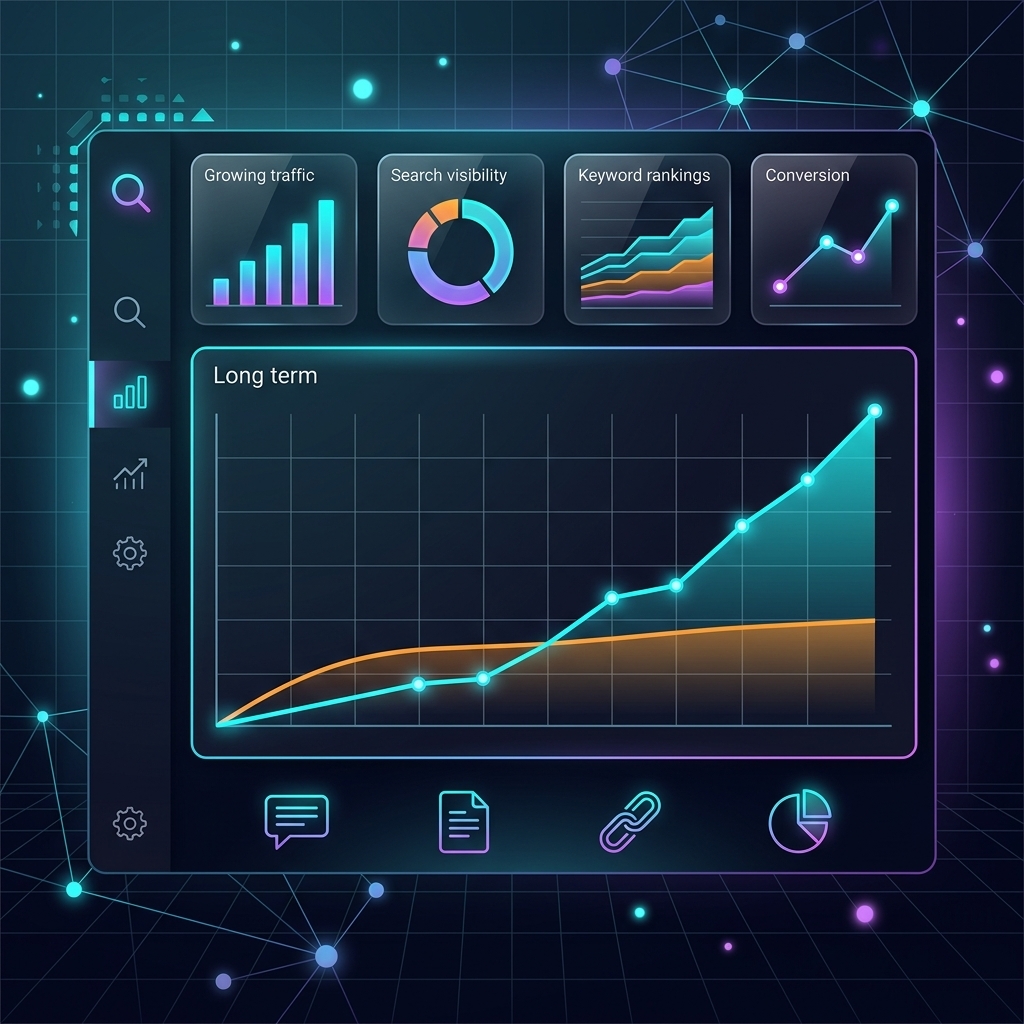
You are building for the long term. If your business plan spans years, SEO delivers compounding returns that PPC cannot match. Every ranking page becomes a permanent traffic asset.
Your budget is limited. A $1,000/month budget generates 190-237 clicks on Google Ads at $4.22-$5.26 CPC. That same budget invested in SEO content can produce pages that generate thousands of free clicks per month within 6-12 months.
Your niche is content-driven. Educational content, how-to guides, and informational queries are better served by SEO. Users searching “how to fix a leaky faucet” want helpful content, not an ad.
CPC is prohibitively expensive. Legal keywords average $6-$9 CPC. Insurance keywords exceed $50 CPC. If your margins cannot support these costs, SEO is the sustainable alternative.
How to Use Google Ads and SEO Together
PPC data informs SEO strategy. Run Google Ads for 60-90 days across a broad keyword set. Identify which keywords convert at the highest rate. Build SEO content targeting those validated keywords. This eliminates guesswork from your content strategy.
SEO reduces PPC dependency. As organic rankings grow, you can reduce Google Ads spend on keywords where you rank organically. Reinvest that budget into new keyword testing or scale existing profitable campaigns.
Dominate the SERP. Appearing in both paid and organic results for the same keyword increases total click-through rate. Users see your brand twice on page 1 — once as a paid ad, once as an organic listing. This dual presence builds trust and captures more clicks than either channel alone.
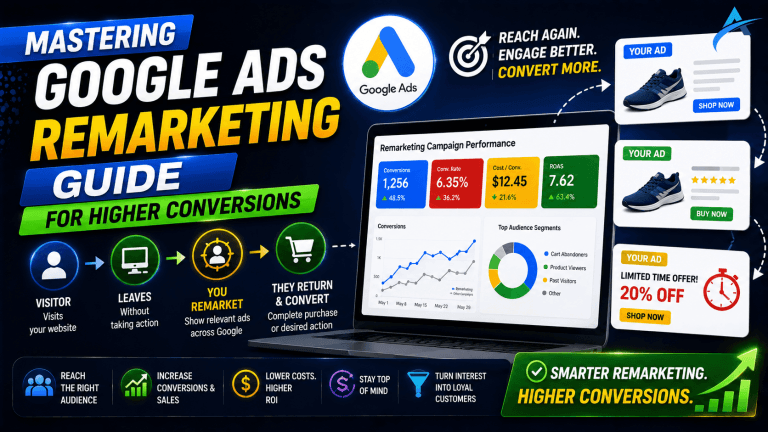
Retarget organic visitors with paid ads. Drive organic traffic to your site through SEO. Retarget those visitors with Google Ads remarketing. This combines SEO’s free traffic with PPC’s targeted follow-up for maximum conversion recovery.
An agency ad account from ADShift ensures your Google Ads campaigns maintain consistent delivery while your SEO builds momentum. No account interruptions. No lost optimization data. Stable performance from day one.

FAQ
Is SEO dead in 2026?
No. SEO is evolving, not dying. Organic search still drives the majority of website traffic across industries. AI overviews and featured snippets have changed the SERP layout, but websites that provide depth, expertise, and unique value continue to earn organic traffic.
Can Google Ads help my SEO?
Indirectly, yes. Google Ads does not directly influence organic rankings. But PPC data reveals which keywords convert, which ad copy resonates, and which landing pages perform — all insights that improve your SEO strategy.
How much should I spend on Google Ads while building SEO?
Allocate enough to generate statistically meaningful data — typically $1,500-$3,000/month for most SMBs. As organic traffic grows and covers key revenue-driving keywords, shift budget to new keyword expansion or reduce total PPC spend.
Which is better for local businesses?
Both. Google Ads (especially Local Service Ads) delivers immediate local leads. Google Business Profile optimization (local SEO) delivers free local traffic over time. Run both: PPC for immediate leads, SEO for long-term local dominance.
Google Ads delivers immediate traffic, but only with a stable ad account. ADShift’s agency ad accounts ensure your PPC campaigns run uninterrupted while your SEO builds momentum. Rent a Google Ads account.