Most advertisers leave 20-30% of potential ROI on the table by mismanaging their Google Ads bidding strategies, often due to a lack of understanding or improper implementation. Navigating the complex landscape of Google Ads bidding strategies is crucial for unlocking profitable campaign performance and maximizing your ad spend. This article will dissect both manual and automated bidding options, guiding you through the selection process to optimize your campaigns effectively.
The Core Challenge of Google Ads Bidding Strategies
Google Ads bidding strategies are complex, requiring a deep understanding of campaign goals and data signals to choose effectively. The core challenge of Google Ads bidding strategies lies in aligning your chosen bid type with your precise business objectives while adapting to Google’s ever-evolving auction dynamics. Choosing the wrong strategy can result in significant wasted spend, missed conversion opportunities, or an inability to scale campaigns profitably. For instance, simply defaulting to “Maximize Clicks” when your goal is lead generation will inevitably lead to suboptimal CPA metrics. I’ve seen campaigns struggle with CPA targets as high as $150 when the client’s internal goal was $75, primarily because the bidding strategy wasn’t aligned with conversion value.
Understanding the fundamental choices between direct control and machine learning is the first step, beginning with manual bidding.

Mastering Manual Bidding: Precision and Control
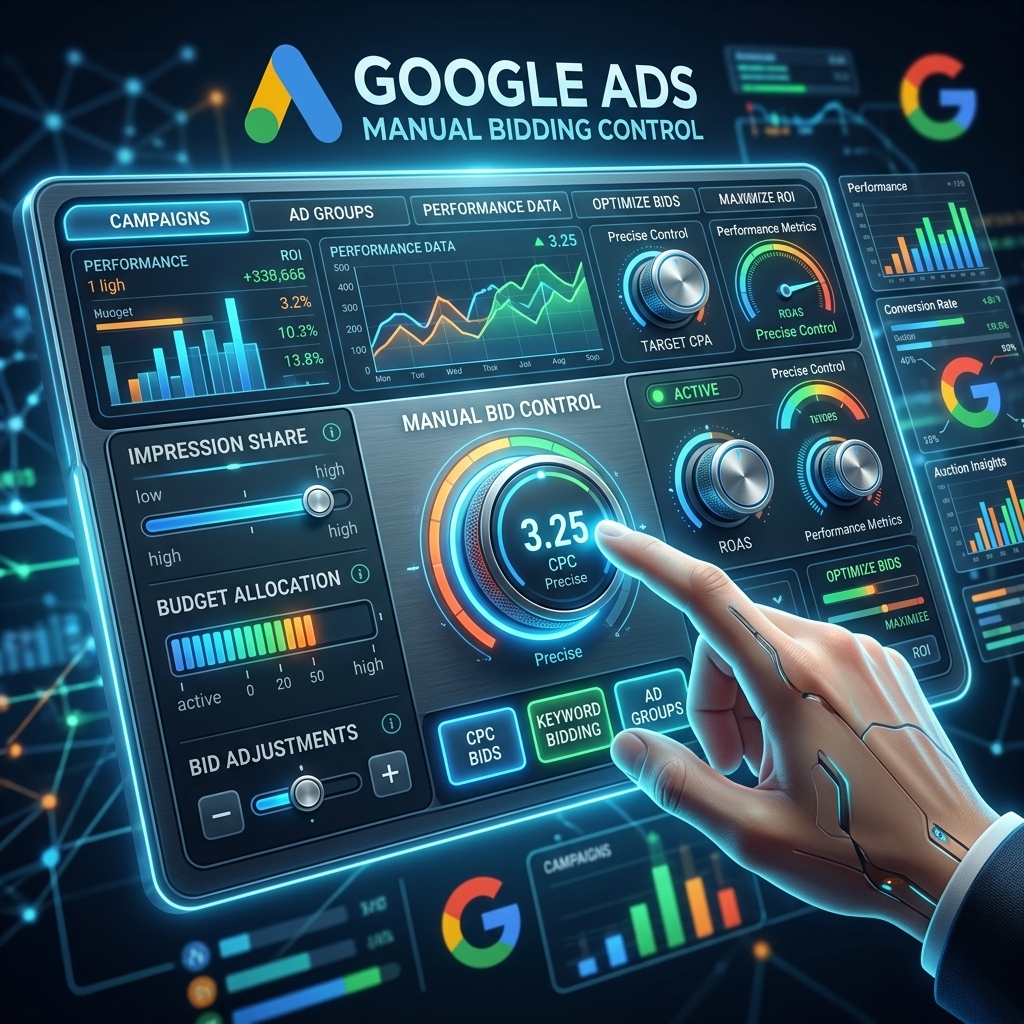
Manual bidding offers advertisers precision and direct control over their Google Ads campaigns, allowing granular adjustments to individual keyword bids. Manual CPC (Cost-Per-Click) bidding defines the maximum amount an advertiser is willing to pay for each click on their ad, resulting in complete command over spend at the keyword or ad group level. This method provides unparalleled transparency, as every bid is explicitly set by the advertiser.
The primary outcome of manual bidding is absolute control, which is particularly valuable for precise testing or managing very specific, high-value keywords. I’ve seen clients achieve remarkably low CPCs of $0.85 on specific long-tail keywords using manual bidding in highly competitive niches, where automated strategies might overbid. This precision comes at a cost: manual bidding is time-consuming, requires constant monitoring, and can easily miss opportunities for scale if not managed diligently. It’s often best suited for new campaigns with limited historical data, highly specific tests, or very small budgets. Advertisers using an agency ad account can sometimes leverage manual bidding initially to bypass new account spend limits, allowing for rapid, controlled testing before scaling to automated strategies.
While manual control offers precision, Google’s automated bidding strategies leverage vast data to optimize for broader performance goals, offering a different path to efficiency.
Harnessing Google Automated Bidding for Scaled Performance
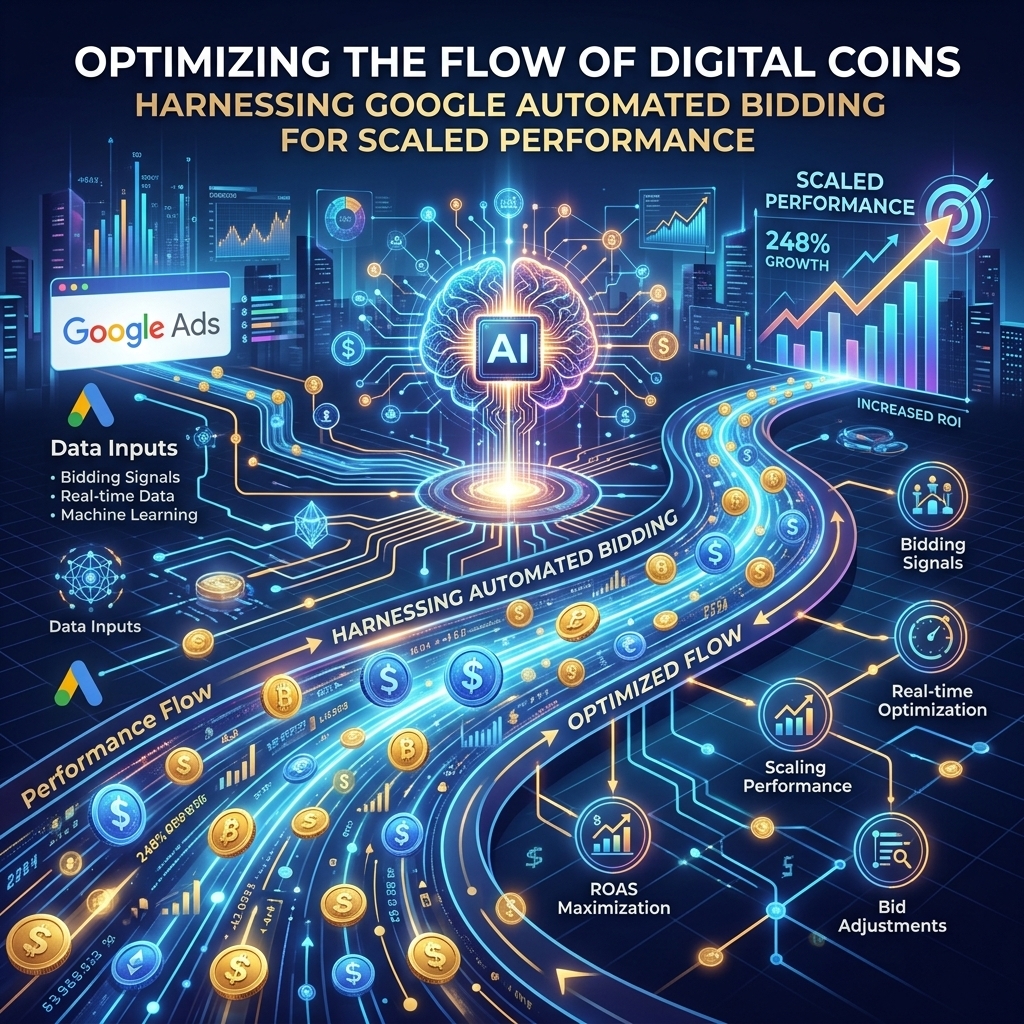
Google automated bidding leverages advanced machine learning to optimize bids in real-time, aiming to achieve specific performance goals more efficiently than manual adjustments. Automated bidding, often referred to as Google Smart Bidding, allows Google’s algorithms to dynamically adjust bids based on numerous signals (device, location, time of day, audience, operating system, etc.) at the moment of auction, resulting in improved campaign performance against defined objectives like conversions or conversion value. This sophisticated approach removes much of the manual guesswork and reaction time required for effective bidding.
The core benefit of Google automated bidding is its ability to process and react to data points at a scale impossible for human managers. This leads to significant time savings, real-time optimization, and access to granular signals beyond human capacity, often resulting in better ROI at scale. Our campaigns consistently show a 15-20% improvement in conversion rates when transitioning from manual to well-configured automated strategies with sufficient conversion data. This is largely due to Google Ads machine learning bidding continuously learning and adapting to user behavior and auction dynamics.
To truly harness this power, understanding the specific types of Google Ads machine learning bidding strategies available is crucial for selecting the right tool for your campaign objectives.
Deep Dive into Key Google Smart Bidding Strategies
Key Google Smart Bidding strategies are designed to align with distinct advertising objectives, from maximizing clicks to driving specific conversion values. Each strategy utilizes machine learning to achieve predefined goals.
- Maximize Conversions: Google Ads maximizes conversions by automatically setting bids to get the most conversions within your budget. This strategy is ideal for advertisers with clear conversion tracking and a desire to get as many conversions as possible, regardless of individual CPA. A client recently achieved a 30% increase in lead volume within a month by switching to Maximize Conversions from eCPC, maintaining a similar CPA by allowing the algorithm to find more conversion opportunities.
- Target CPA (Cost Per Acquisition): Target CPA sets bids to help you get as many conversions as possible at or below the target CPA you set. This strategy is excellent for predictable lead generation or sales where a specific cost per conversion is paramount, providing a strong control over acquisition costs.
- Maximize Conversion Value: Maximizes conversion value by setting bids to get the most conversion value within your budget. This is perfect for e-commerce businesses where different products have varying profit margins, allowing Google to prioritize higher-value sales.
- Target ROAS (Return On Ad Spend): Target ROAS aims to achieve the target return on ad spend you set, optimizing bids to maximize conversion value while hitting your ROAS goal. I’ve seen e-commerce campaigns increase their ROAS from 250% to 380% within a quarter using Target ROAS, specifically when paired with a robust product feed and accurate conversion value tracking. This strategy is invaluable for maximizing profitability from ad spend.
- Enhanced CPC (eCPC): eCPC is a semi-automated strategy that automatically adjusts your manual bids up or down to increase conversions. It serves as a good transition point from manual bidding, offering a balance of control and automation without fully relinquishing manual oversight.
- Maximize Clicks: Maximize Clicks sets bids to help you get as many clicks as possible within your budget. This strategy is best for brand awareness campaigns or driving traffic to a new page, not typically for direct conversions where CPA or ROAS is the primary metric.
- Target Impression Share: Target Impression Share sets bids to help you show your ads at the top of the page, anywhere on the page, or on the absolute top of the page. This is primarily a brand visibility strategy, useful when competitive visibility is a key objective.
Advertisers looking for advanced capabilities and higher spending limits often find that a verified Google Ads agency account provides the necessary infrastructure to test and scale these strategies effectively. For a comprehensive overview of Google Ads, refer to our Google Ads complete guide.
Selecting from these diverse strategies requires careful consideration of your campaign objectives and available data, guiding you toward the most effective choice.

Choosing the Right Google Ads Bid Strategy: A Data-Driven Approach
Choosing the right Google Ads bid strategy requires a data-driven approach, aligning the strategy with your specific campaign goals, historical performance, and available conversion data. An informed decision minimizes wasted ad spend and maximizes campaign effectiveness.
Several critical factors influence this choice:
- Campaign Goal: Your primary objective dictates the strategy. If you need leads, Target CPA or Maximize Conversions are suitable. If it’s pure traffic, Maximize Clicks. For e-commerce profit, Target ROAS or Maximize Conversion Value.
- Data Volume: Automated strategies, especially conversion-focused ones like Target CPA or Target ROAS, require sufficient conversion data to train effectively. Generally, at least 15-30 conversions in the last 30 days are recommended. Without this, manual bidding or Maximize Clicks might be more appropriate initially.
- Budget: Smaller budgets might start with manual or Maximize Clicks before accumulating enough data and scaling to conversion-focused strategies. Very restrictive budgets can also hinder automated strategies from exploring optimal bid ranges.
- Risk Tolerance: Manual bidding offers complete control but demands significant time; automated bidding offers efficiency but less direct intervention and can sometimes fluctuate more in the short term.
Practical steps for selection include:
- Define Clear KPIs: Clearly articulate what success looks like (e.g., “$50 CPA for leads,” “300% ROAS”).
- Assess Data History: Review your account’s conversion volume and consistency. This informs which automated strategies are viable.
- Test Iteratively: Don’t switch strategies daily. Run tests for 2-4 weeks to allow machine learning to adapt and gather sufficient data before making a judgment. Use campaign drafts and experiments for controlled A/B testing.
- Monitor Performance: Constantly review metrics like CPA, ROAS, conversion volume, and impression share to ensure the strategy is performing as expected.
Using a rent agency ad account can provide a stable environment for testing various bidding strategies without the common new account restrictions that hinder data accumulation and strategy experimentation.
Once a strategy is chosen, continuous optimization and adaptation are paramount to maintaining peak performance and responding to market changes.

Optimizing and Adapting Your Google Ads Bidding Strategies
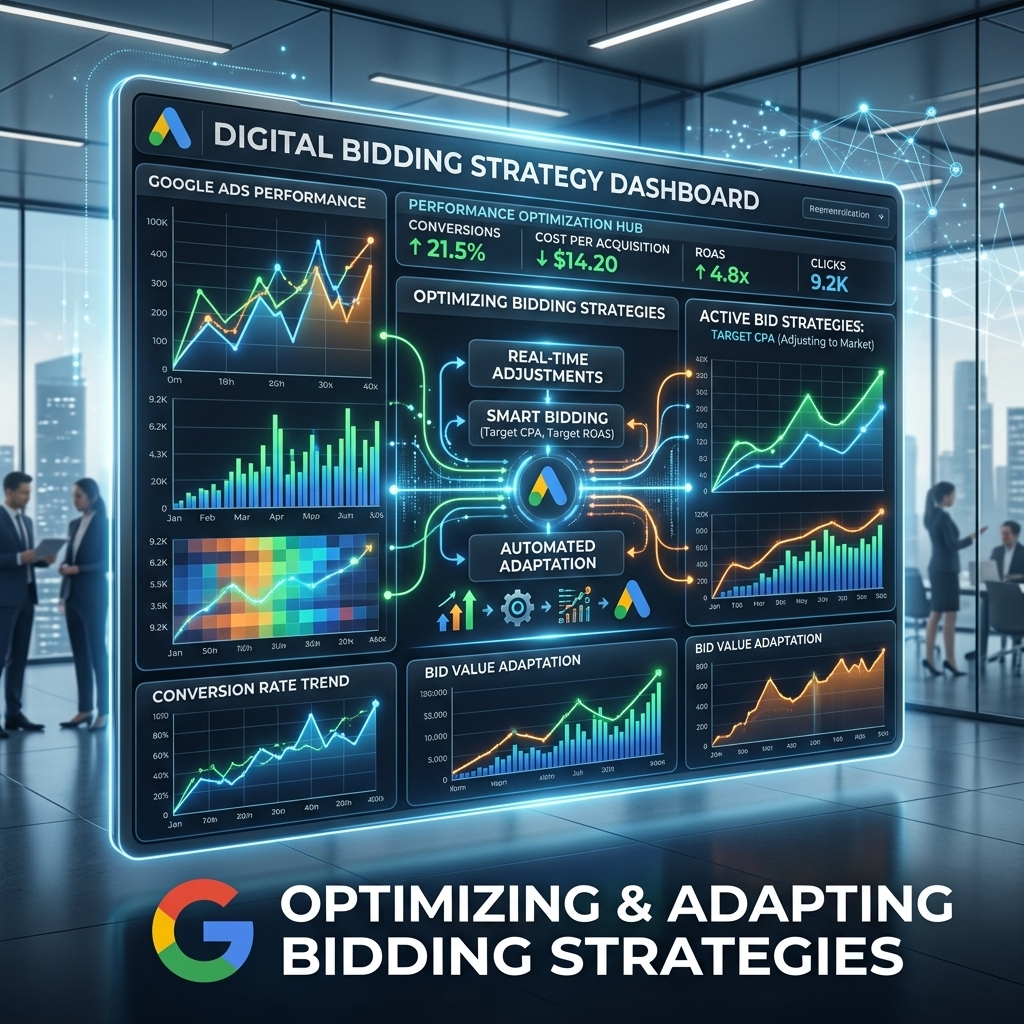
Optimizing Google Ads bidding strategies is an ongoing process that demands continuous monitoring, data analysis, and timely adjustments to maintain peak campaign performance. A “set it and forget it” approach will inevitably lead to diminishing returns, even with advanced Google Ads machine learning bidding.
Here are key tips for effective optimization:
- Accurate Conversion Tracking: Ensure all conversions are tracked correctly and assigned appropriate values. Inaccurate or incomplete data will mislead any automated strategy, leading to suboptimal bidding decisions. This is the foundation of smart bidding.
- Provide Sufficient Budget: Automated strategies need enough budget to explore bidding opportunities and learn effectively. Constricting budgets too tightly can limit their ability to find optimal conversion paths, potentially hindering performance.
- Leverage Audience Signals: Feed your strategies with strong audience signals, such as remarketing lists, customer match lists, and custom segments. These signals provide valuable context to Google’s algorithms, improving targeting and bid efficiency.
- Maintain Ad Copy & Landing Page Relevance: Even the most sophisticated bidding strategy can’t overcome poor ad copy or irrelevant landing pages. Maintain high Quality Scores by ensuring strong ad relevance, expected CTR, and landing page experience.
- Utilize Seasonal Adjustments: For predictable spikes or dips in demand (e.g., Black Friday, holiday sales), use seasonal adjustments to inform Smart Bidding algorithms of upcoming changes, allowing them to bid more aggressively or conservatively as needed.
- Review Performance Frequently: Review performance at least weekly, focusing on trends rather than daily fluctuations. Look at key metrics like CPA, ROAS, conversion volume, and impression share. Be patient, as automated strategies need time to learn.
- Account Stability: AdShift accounts provide the stability and higher limits often needed to run extensive A/B tests on bidding strategies. This ensures you gather enough data for confident optimization decisions without hitting spend caps or facing new account restrictions that can skew results. Our clients frequently use these accounts to test new strategies rapidly and effectively.
Frequently Asked Questions
What is the best Google Ads bidding strategy?
The ‘best’ Google Ads bidding strategy depends entirely on your specific campaign goals, available conversion data, and budget. For instance, Maximize Conversions is ideal for getting the most conversions within budget, while Target ROAS is suited for maximizing conversion value at a specific return. There is no one-size-fits-all answer; it requires a data-driven approach and continuous testing.
How does Google automated bidding work?
Google automated bidding, or Smart Bidding, leverages advanced machine learning to optimize bids in real-time for specific performance goals. It analyzes numerous signals at the moment of auction—such as device, location, time of day, audience, and past performance—to dynamically adjust bids, aiming to improve outcomes like conversions or conversion value more efficiently than manual adjustments.
When should I use manual bidding in Google Ads?
Manual bidding in Google Ads is best used for new campaigns with limited historical conversion data, highly specific testing scenarios, very small budgets where granular control is critical, or when targeting niche, long-tail keywords. It provides complete command over spend at the keyword or ad group level, though it demands significant time for monitoring and adjustments.
What is the difference between Maximize Conversions and Target CPA?
Maximize Conversions aims to get the most conversions possible within your specified budget, without necessarily adhering to a strict cost-per-acquisition. Target CPA, sets bids to help you achieve as many conversions as possible at or below a specific average cost-per-acquisition (CPA) that you define. Target CPA prioritizes a cost efficiency goal, while Maximize Conversions prioritizes volume within budget.
Can I switch bidding strategies in Google Ads?
Yes, you can switch bidding strategies in Google Ads. It is crucial to do so strategically. Allow each strategy sufficient time (typically 2-4 weeks) to gather data and optimize before making changes. Frequent switching can disrupt the machine learning process and lead to inconsistent performance. Always monitor key metrics closely after any change.
Conclusion
Choosing and optimizing Google Ads bidding strategies is not merely a technical task; it is a critical driver of profitability and campaign success. The “best” strategy is always the one that most effectively aligns with your specific business goals, supported by accurate data and continuous adaptation. Whether you opt for the granular control of manual bidding or the machine learning power of Google automated bidding, consistent monitoring and optimization are non-negotiable for maximizing your ROI.
Ready to take your Google Ads campaigns to the next level with advanced bidding strategies? Rent a verified Google Ads agency account from AdShift and gain the stability and spending capacity needed to implement and scale your most profitable bidding strategies.